Clio's Review: Why SNAP Works
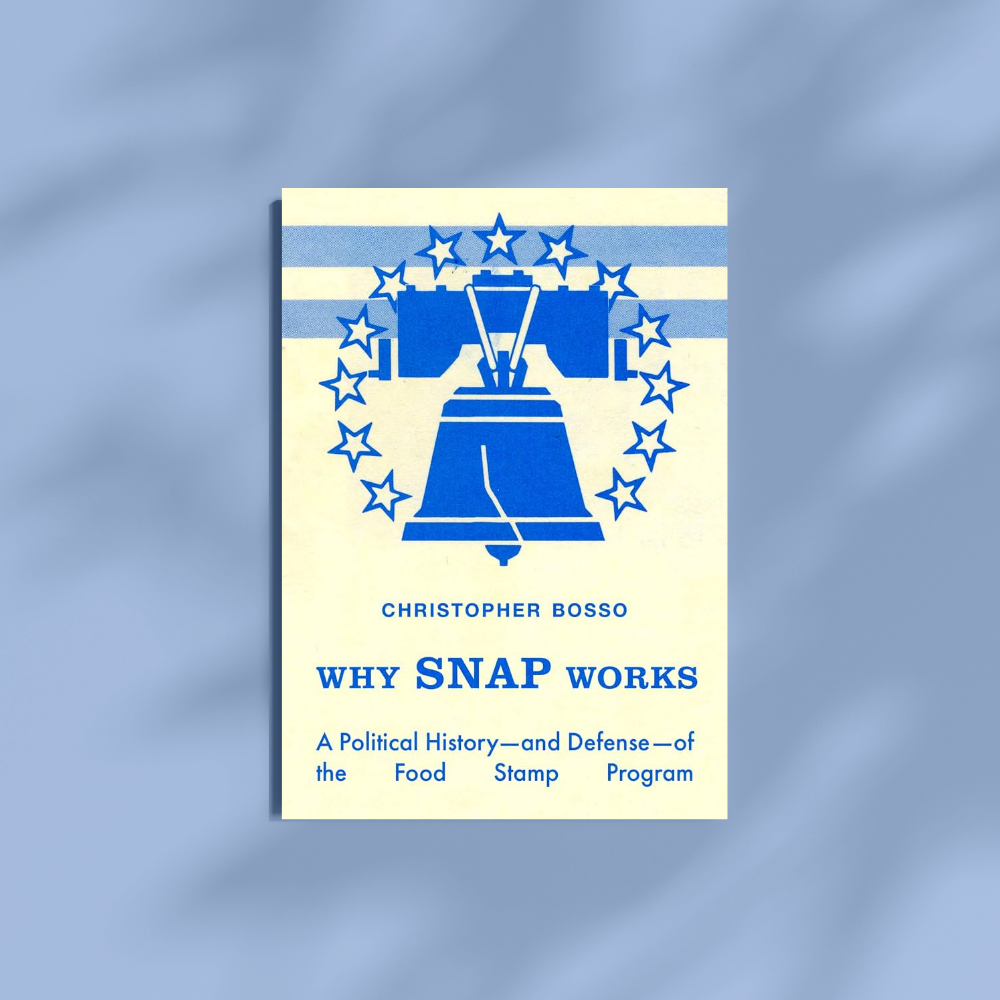
Christopher Bosso, Why SNAP Works: A Political History—and Defense—of the Food Stamp Program (University of California Press, 2023).
Christopher Bosso’s Why SNAP Works: A Political History—and Defense—of the Food Stamp Program is a fascinating and highly readable history of one of the nation’s most important and resilient social programs. Bosso’s central argument is that SNAP works not simply because it helps alleviate hunger, but because its design gives low-income Americans purchasing power and a measure of autonomy while simultaneously serving the interests of farmers, food producers, retailers, and the broader economy. That combination of consumer choice and an unusually durable political coalition, Bosso argues, helps explain why SNAP has survived decades of changing political priorities and repeated challenges to the American welfare state.
Bosso traces SNAP from its origins in the Great Depression, when policymakers attempted to confront what has since come to be known as “the paradox of want amidst plenty.” Farmers were producing more food than markets could absorb while millions of Americans went hungry. Early efforts to reconcile these problems were unpopular with retailers, social workers, and recipients alike. The Food Stamp Program (the forerunner to SNAP) offered an ingenious alternative: give people the purchasing power to shop for themselves.
From there, Bosso follows the program through its revival in the 1960s, expansion under Richard Nixon, retrenchment during the Reagan years, welfare reform, and its eventual transformation into SNAP. Particularly illuminating is his account of the political coalition that made food assistance part of the Farm Bill, binding the interests of farmers, retailers, food producers, anti-hunger advocates, and SNAP recipients together.
The result is more than a history of food stamps. Bosso uses SNAP to illuminate enduring American debates about poverty, deservingness, government responsibility, and whether receiving public assistance should limit one's autonomy. Why SNAP Works is particularly relevant today, as renewed efforts to restrict what SNAP recipients may purchase revive arguments almost as old as the program itself.
I thoroughly enjoyed and highly recommend Why SNAP Works. Listen to or watch my conversation with Christopher Bosso, then buy the book and discover the history behind today’s SNAP debate.

Clio's Review of The Place in Europe