Hair Apparent: How Americans Learned to Read Race, Gender & Power in Hair | Sarah Gold McBride
Today, our hair is often a means of self-expression. But what if you had no control over what your hair expressed? And I’m not just talking about a bad hair day! In nineteenth-century America, hair conveyed something very different than what it does today. In this episode of The Clio Dialogues, I am joined by my friend and former classmate (Go Bears!), historian Dr. Sarah Gold McBride to discuss the surprising American cultural history of hair. She explains that by taki...


Today, our hair is often a means of self-expression. But what if you had no control over what your hair expressed? And I’m not just talking about a bad hair day! In nineteenth-century America, hair conveyed something very different than what it does today.
In this episode of The Clio Dialogues, I am joined by my friend and former classmate (Go Bears!), historian Dr. Sarah Gold McBride to discuss the surprising American cultural history of hair. She explains that by taking seriously something so ordinary as hair, we can learn much about nineteenth-century ideas about race, gender, nationhood, and belonging.
In This Episode
- Why beards surged in popularity in the mid-nineteenth century
- What facial hair had to do with masculinity, citizenship, and political power
- How racial pseudoscience transformed the beard into a symbol of white male authority
- How Frederick Douglass used his photographed image as a challenge to racist ideas about Black bodies
- How nineteenth-century Americans attempted to “read” bodies
- Bearded women, P. T. Barnum, and anti-cross-dressing laws
- Why hair meant something fundamentally different to nineteenth-century Americans than it does to us today
About the Guest
Dr. Sarah Gold McBride is the author of Whiskerology: The Culture of Hair in Nineteenth-Century America, and a historian and award-winning Lecturer in the American Studies program at the University of California, Berkeley, where her research and teaching focus on the daily lives of ordinary people in the nineteenth-century United States, and the information and objects they found meaningful as they tried to understand race, gender, and national identity.
Buy the Book
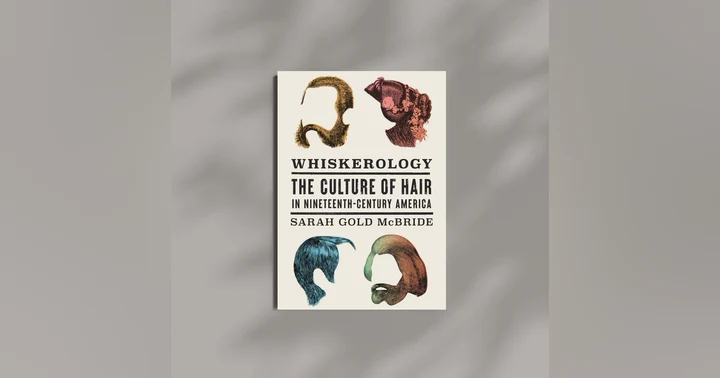
Whiskerology: The Culture of Hair in Nineteenth-Century America
Pre-order the Paperback (available November 17, 2026)
If you enjoyed this episode…
Subscribe on YouTube
Follow on Instagram
Follow on Facebook
Watch, Listen, Review, and stay up to date: www.cliodialogues.com
Reviews and shares make a real difference in helping thoughtful conversations about history reach new audiences.
**History runs on curiosity…and occasionally, caffeine.**
The Clio Dialogues is independently produced. If you'd like to help support future episodes, consider buying me a coffee. Every cup helps keep new conversations coming.
***************
Affiliate Disclosure
Some links in The Clio Dialogues show notes are affiliate links. As a Bookshop.org Affiliate and Amazon Associate, I may earn a small commission on qualifying purchases at no additional cost to you. Those commissions help offset the costs of producing The Clio Dialogues, allowing me to continue bringing historical scholarship to a wider audience. Thank you for your support.
BONUS: If you order through my Bookshop.org link ~ not only will you get fascinating books, but you'll also be supporting the author, this podcast, and local independent bookstores. A win for all!
Editorial Independence
The Clio Dialogues supports productive, respectful, freedom of expression.
My opinions are entirely my own and are never influenced by affiliate or guest relationships.
My guests’ opinions are entirely their own and may deviate from mine or yours, and that’s okay.
Books and products featured on this channel are selected because I believe they are relevant to the conversation and the knowledge is worth having. I will not recommend products I do not believe in.
Jennifer Robin Terry
Hello and welcome to the Clio Dialogues, the podcast that links history with the present to help us better understand the world we live in today.
Speaker 1
Speaker 1
I'm your host, Jennifer Robin Terry.
Speaker 1
What does your hair say about who you are? It depends on who you ask. And what century you're in.
Speaker 1
My guest today is Dr. Sarah Gold McBride, a historian and award-winning lecturer in the American Studies program at the University of California, Berkeley. She is the author of Whiskerology: The Culture of Hair in Nineteenth Century America, published by Harvard University Press.
Speaker 1
Welcome, Sarah. I'm so glad you could join me here on the Clio Dialogues.
Sarah Gold McBride
Hi, thanks so much for having me. I'm excited to be here.
Jennifer Robin Terry
I'm so excited to talk to you about your book. As I was reading it, my mind kept going back to the fall of 2010. Particularly that chapter on facial hair. Because that was when the San Francisco Giants pitcher Brian Wilson inadvertently set off this Fear the Beard craze. Do you remember that?
Sarah Gold McBride
Oh, yeah, of course. Right.
Jennifer Robin Terry
It's kind of funny because it's tied in my mind to you. Because that semester we were also taking David Henkins' class on the ordinary and the extraordinary.
Sarah Gold McBride
That's right. Yeah.
Jennifer Robin Terry
The Giants kept coming up and people were talking about beards. And I know you weren't exactly working on this project, and yet I remember that you had things to say.
Sarah Gold McBride
Maybe it was planting a seed because that was just about six months before I did start working on this project. It's kind of amazing that there's a whole chapter in the book that started as a grad school seminar paper the semester after that semester. So it really does go almost all the way back to Fear the Beard. Maybe there was something, you know, subconsciously planted that semester.
Jennifer Robin Terry
Yeah, maybe. That was also the time that I started noticing that a lot of young millennial men were starting to wear beards.
Sarah Gold McBride
Yes. This was a funny moment when I was a graduate student. So it was spring of 2011 when I wrote my first uh paper for a seminar in which I initially started with an interest in bearded ladies of the late 19th and early 20th century freak show. That's where this whole book started was with bearded ladies, which is surprising, I think. Um it surprises me. It certainly surprises readers, I think. I had had an interest for a while about freak shows and the way that freak shows, as this enormously popular type of popular entertainment, became this almost site of public learning about race and gender. And so I thought, oh, bearded ladies, there's probably something there about gender. And I later learned about race as well. I started with bearded ladies through researching bearded ladies. I learned a lot about beards on men and what beards meant to American men in the same time period, the late 19th and early 20th century.
Jennifer Robin Terry
When you saw beards on men back in 2011, did you start to see something like reading into it?
Sarah Gold McBride
You know, it's this is a good question. I think in true historian fashion, I didn't think a lot about the contemporary world when I was very enmeshed in the 19th century. But journalists were noticing that there were a lot more beards being worn by millennial men. And there were a variety of beard trends over the next three, four, five years. There was one summer where men were putting, some men were putting like little flowers in their beards, at least for Instagram. I don't know if anyone was wearing bearded flower beards out in daily life. But I started getting inquiries from journalists for the first time ever because of that beard research, because there weren't a lot of scholars who were experts in the history of the American beard. And so, yes, there was this moment. And it was challenging for me to answer the question of why are they coming back now? Because I felt like the context we have with hindsight of the late 19th and early 20th century allowed me to see that much more clearly what beards meant to that era. Part of what I really insist on as a historian, specifically of hair, is that hair has historically specific meanings and culturally specific meanings as well. What a beard meant in 1880 is different than what a beard meant in 2010, for example. And right now we're actually in an interesting moment of beards as well. This has come up a little bit in the last year since my book came out. A lot more politicians actively in public life, as opposed to post-leaving office, are wearing beards. The most noticeable, of course, is JD Vance. He's our first bearded vice president since the 1930s. And it's not just Vance, and it's not just men associated with the right or with the Republican Party. There are men on the left and the right who are wearing facial hair. Pete Buddha judge, Zuhan Mamdani, John Fetterman. There's all there are men from across the political spectrum wearing beards while in office. I think that what this moment now and the 2010 sort of millennial hipster beard and the late 19th century beard all share in common is eras in which masculinity was fraught, or I might even go so far as to say in crisis or unsettled in some kind of way, that beards have meant different things in different cultures and times and places, but often they have had some association with masculinity or shorthand for masculinity. And I think in all three of those eras, it was a moment in which what a man should be, who is a good American man, has been unsettled.
Jennifer Robin Terry
Where did this begin? Because when I think of founding fathers, we don't see these beards and, you know, burliness.
Sarah Gold McBride
Yes, absolutely. So in the era of the founding fathers, the late 18th century, even the first few decades of the 19th century, barefacedness was the absolute norm. There are some very scattered references to men with beards or specific public figures who wore beards in these periods, but almost without exception, these are people on the fringes of American society. The norm was to shave, to shave sometimes multiple times a week. And most shaving was done by a barber. It was very uncommon for men to shave themselves prior to the turn of the 20th century with the invention of the first safety razors, which makes it more comfortable and safer to not cut yourself if you're shaving at home. And there's other kinds of technological changes, um, better lighting, easier access to clean running water, better eyeglass technology, the all of which make it easier to shave oneself at home.
Jennifer Robin Terry
Probably better mirrors as well.
Sarah Gold McBride
Yes, better mirrors, exactly. Yes. All the pieces required to shave one's face safely. So in the 1700s and the early 1800s, barbers did this labor. A lot of barbers were black men, especially in the American South. It was just a normal part of men's routines to go to the barber at least once, sometimes multiple times a week, to get a shave. The shifts around the 1850s, that's really the pivot point I write about in the book between barefacedness being the norm and beardedness becoming much, much more common. Even I would go so far as to say is a norm. So prior to the 1850s, there are these interesting examples of writing that is pro beard, magazine articles, books, newspaper articles that talk about how great beards are, how annoying it is to shave so often, how much money you waste going to the barber so often. One of my favorite sources is a guy writing about he calculated how many books he could read per year, more if he didn't have to go to the barber twice a week.
Jennifer Robin Terry
That's a guy after my own heart.
Sarah Gold McBride
I know, right? That's what I thought too. So even in these eras when the norm is men are going to the barber, they are shaving their faces. And yet there are these examples of sort of wistfully, "Aren't beard's great," even if they're making these different choices at home or, you know, with their barber. But around the 1850s, this there is a pretty massive shift. What changes is the choices men are making for their own faces. And wouldn't it be great if there was like one single cause that changed everything? Right. It would make my job so much simpler. But as we know, as historians, it's never that simple, right? History is so complicated and nuanced. So I think it's a combination of a few different factors that resulted in many men and then almost like a domino effect or a sort of snowball effect that so many men, white men and black men alike, start not shaving off their facial hair. One of those causes, because barbering is such a commonly practiced profession by black men, that as sectional tensions start becoming more intense and as white Southerners start becoming more and more anxious about the possibility of slavery exploding into something violent, which we know it obviously does with the Civil War in 1861. But as tensions and really nervous fear among a lot of white Southerners about the potential for violence amps up in the 1840s and especially the 1850s, for a lot of white Southern men, the idea of going multiple times a week to a black man who's holding a blade against your throat maybe feels a little bit scarier than it would have for a previous generation. And some men start trying to shave themselves at home instead of going to a black barber and find that it sucks. They find that it's painful and it's uh challenging to do with a straight razor and without yet those changes in technology we talked about earlier. And so some men just stop shaving altogether because they don't feel comfortable going to a black barber and they don't feel comfortable being their own barber. So we see some men growing beards for that reason.
Jennifer Robin Terry
Do you see this beard growth in the north as well as the south?
Sarah Gold McBride
Yes, it is quite surprisingly widespread across the north, the south, the west, the east. There's some beardedness in the frontier before we see it more widespread in cities. For example, the first person to run for president, John C. Fremont from California, he ran for president. He didn't win, but was the first person to run for president with a beard. So someone from California is quite fitting, right? Someone on kind of the frontier of the nation. Of course, the first bearded president is Abraham Lincoln. He's elected in 1860 famously, having grown what we now call chin strap style beard between the primary and the general election. The printing company had made all these prints of Lincoln's face to celebrate his win. They thought it would be a popular consumer good, but then he was barefaced in these prints because that's what he looked like before the primary. And then they got all these complaints like that's not what he looks like anymore. Now he has this beard. So I wouldn't claim that there was sort of regional evenness, like equal numbers of men in all four quadrants of the US and North and South. That's partly why I see this sort of patchwork of different causal factors. Once men start growing beards and there are these public figures like Lincoln, their face is very visual, their faces are represented in photography and in print and illustration and newspapers that we see this sort of ramping up, and even more and more and more men start wearing beards all across the United States. What I saw in the evidence is that there's a lot of symbolism in the desire by men to start wearing beards in the middle of the 19th century when their fathers, their grandfathers had scorned facial hair for so long, that this is a moment in which political citizenship is quite unsettled. White women are pushing for more political rights in the first wave of feminism. Black men and black women are pushing for more political rights. And certainly in the aftermath of the Civil War, we have the 13th, 14th, and 15th Amendments, which accord greater political citizenship and political rights to black men. So white men are no longer the same de facto soul holders of political power and political citizenship as they had been for decades. We see this in some of the writing of the 1850s and beyond. This sense that a beard can symbolize the supposed naturalness of white men's political power. I expected to find sources talking about masculinity and beards being sort of men's birthright in a way. That wasn't surprising to find. And I did find sources that said that. But I was surprised to find sources that also talked about the white supremacy of the beard, that sources arguing that only white men could grow a beard and that black men could not grow beards and indigenous men to North America could not grow beards and East Asian men could not grow beards. And if you saw some hair on the face of a man who was non-white, it wasn't truly a beard, it was just a little bit of hair on the face.
Jennifer Robin Terry
When I was reading your book, I thought, well, do they not see?
Sarah Gold McBride
Great question. Do they not see? I think it's a combination of things. I read a lot of contemporary medical literature from the 20th and 21st centuries, modern studies about hair and race and hair and gender, because I wanted to understand if there was any basis. A lot of the claims being made about hair, whether facial or head hair and its relationship to race and gender in the 19th century are rooted in logics of science. Most of the scientific conclusions they're coming to, we today would say this is nonsense science, this is pseudoscience. This is the scientific method done backwards, where the scientists would begin with the conclusion they want to prove and sort of cherry pick the evidence going backwards that would lead them to that conclusion. But I wanted to know is there any validity or any resonance with contemporary scientific findings that corroborate or reinforce any of what the 19th century folks were claiming? The short answer is that all of this is a spectrum. To what degree men whose ancestors come from different parts of the world have thicker or thinner facial hair, it's a spectrum, unsurprisingly. There is some degree to which men from European countries on the average might have thicker, fuller beards than men from East Asia and Indigenous to North America in particular. By the time white supremacist scientists are trying to find some scientific proof for white supremacy, they have this long lineage of not necessarily scientists, but people who were traveling the world making observations about the faces of non-white peoples. John Smith, for example, writes of encountering people who were indigenous to North America and being very fascinated by how thin the beards were of some of the men. In some cases, biologically, they just didn't grow very thick beards, but in some cases culturally. He noted that some indigenous tribes practiced hair plucking from men's faces. So they're not making this up whole cloth, I would say. It's very cherry-picked evidence, absolutely. It's very much rooted in the claim they already tried to make. And the fact that the claim of white men's supremacy could be rooted in beardedness just really tells us how much beards matter to claims of political power.
Jennifer Robin Terry
Because white men grow beards, white men are more masculine, more authoritative, and better suited to lead the nation. Is that the argument there?
Sarah Gold McBride
Yeah, exactly. There's this one guy, John Van Every, who was a real vehement white supremacist. He also owned a printing press and lived in New York, and he wrote a lot about race and political participation during and just after the Civil War. We cannot underestimate access to the printing press, right? The fact that he was able to be such a mouthpiece for and spread his ideas quite widely because he owned the means of production. So he also had a newspaper. He wrote pamphlets, he wrote books, he printed them, he circulated them. He had wide reach in the mid-19th century. He also would take these dense, like 400-page scientific tomes about racial science and he would condense them into much shorter texts that would synthesize and simplify some of these scientific ideas for a broad audience. Scientific racism for dummies, equivalent to, you know, something. In one of his publications, In the Era of Reconstruction, he basically says all of these people, these white northerners are trying to reconstruct the black race, but no attempt to elevate black men will ever be possible until they can also reconstruct the beard. That unless you put a beard on black men's faces, they will never truly be equal.
Jennifer Robin Terry
I wonder what he thought about black men after when they start growing these beards.
Sarah Gold McBride
Exactly. And that's one of my favorite sort of tiffs in the book is Frederick Douglass versus John Van Every. Douglas is a perfect example. Douglas was a very visible, prominent black political figure and cultural leader. And he wore for almost his entire adult life a very full beard, from ear onto the chin to the other ear with a mustache over the lip. Douglas wrote a lot about photography during his lifetime. He had his portrait taken so many times. He's actually the most photographed person of the 19th century US.
Jennifer Robin Terry
Really?
Sarah Gold McBride
Yes. Did that surprise you? Did you know that? I was shocked to learn that. Once I learned more about Douglas' ideas about photography, it made perfect sense. It no longer shocked me. We have 160 existing different photographic portraits of Douglas taken over the course of his lifetime. He wrote very explicitly that the way black men and women's bodies had been captured visually through illustration and through sculpture. If a white artist is the vehicle for that image, even if the person is trying their hardest to be true to life, to give the perfect rendering of the appearance of a black face, that the cultural conditioning of white supremacy makes it impossible for a caricature not to slip in in some kind of way. Fascinating. He thought that photography was the only way to truly represent black bodies and black faces as they were true to life. So he used his own photographed face as kind of counterevidence to the kind of claims that Van Every was making. So when someone like Van Every is saying black men don't grow beards, I don't think that they're just, you know, operating like this, pretending like they don't see Douglas and the many, many, many other black politicians in particular. There's so many portraits of the first black elected officials, the first black um house representatives, the first black senator, other um state and local officials. Almost across the board, these men are wearing some kind of facial hair, whether it's a beard or a mustache or very extensive sideburn. Anyway, I don't think that Van Every was just ignoring or pretending he didn't see. It didn't just mean hair on face. It had this symbolic meaning as well. To see a black man with some hair on his face, you say, well, that's not a beard. A beard is this quasi-physical object, quasi-symbolic object that signifies white men's political power in all realms of life.
Jennifer Robin Terry
This could have been a whole book on facial hair, but it's one chapter. So you also talk about long hair, you talk about hair science, hair as a disguise. So there must be a meaning to hair overall that Americans in the 19th century are getting. What can you tell us about hair in the 19th century, writ large?
Sarah Gold McBride
Yeah. You're so right about this. I mean, I mentioned that this whole research project started with the bearded ladies and from that to the beards on men's faces. But what I realized is that this was just a small slice of the story, that the facial hair story was part of a bigger hair story of 19th century American life. What I found through my research is that in contrast to the way hair was understood before the 19th century, and I think to a large degree since the 19th century, for 19th century Americans, hair was understood to be a body part. And I don't mean that sort of symbolically, metaphorically, hair was treated as a part of the body. It was within the boundaries of the body. It wasn't an accessory to it or attached to it. It was of the body. And that because hair was understood to be a body part, it was thought to be capable of communicating truths about the interior person reflected on the outside. And then in this way, hair is really similar to some of what we already knew about 19th century Americans' efforts to read the body in some kind of reliable way. Um, the two most famous iterations of this are phrenology and physiognomy. Phrenology is about the shape of the head, which was thought to reflect the shape of the skull, which in turn reflected the shape of the brain. And so this is all about mapping correspondences between parts of the brain that were heavily or underdeveloped, and how that in turn shaped the skull would shape the head. Physiognomy essentially is similar, but for the shape and the size of the facial features. So physiognomists would look at the shape of the nose, the shape of the chin. Generally speaking, certainly in the scientific world, phrenology and physiognomy are absolutely pseudosciences. And yet I think that we can kind of understand the logic here. It's part of the flesh and bone part of the body. What I found in my research was that hair also was understood to be a body part that, like the shape of the skull or the nose of the chin, reflected the inside on the outside. That because hair was biological, because hair grew from the body through the um skin, that its color, its texture, its length, even were invested with biological meaning. Even stylistic choices are invested with biological meaning. So we start to see sources say things like only women can grow long hair. Only non-white men grow long hair. Men can only grow short hair among white men. And we're like, what? This no, of course not. That's Sophie, right?
Jennifer Robin Terry
So barbers are kind of operating in secret, right? They don't want to blow their cover.
Sarah Gold McBride
I mean, it's it's so it's so farcical to read. It's sort of false on its face that we can only ask, like, well, what's going on here? But what it shows us is how much biological meaning is the foundation of what hair means in the 19th century. That investing hair, color, texture, like thickness, thinness, how much coverage on the face or not with biological meaning, but also stylistic choices like length with biological meaning speaks to the way that hair becomes understood in these largely biological terms, that it is a representation of sort of the biological self, the true self, not in the sense we now think of true self like who you really understand yourself to be based on years of reflection, self-discovery. So if a person was trying to misrepresent or hide or obscure or falsify their identity, their hair might give them away. Their hair was the tell of who they really were on the inside.
Jennifer Robin Terry
So I'm wondering, are people changing their hairstyles? Because in the 21st century, we change our hairstyle to fit the way we feel or the way we want to present ourselves. But you're saying it didn't matter because the texture, the color, the length, it transcended that.
Sarah Gold McBride
Yeah. So people absolutely were changing their hair. I found as far back as the 17th century a recipe book that has both like how to make a stew, but also how to remove unwanted hair, for example. Um, I've seen recipes in these books as far back as the 1600s that include recipes for removal of unwanted hair or dyeing of the hair a different color. Often the ingredients are ghastly, like lead, um, lye, things like this. But there are both home remedies for changing the hair. And then in the 19th century, with the explosion of the market economy, tons of consumer products that can be purchased to change the hair, to grow more hair when you're balding, to remove hair you no longer want to have, to change the color. There's all kinds of fake hair that people can purchase as well: wigs, toupees, fake beards, fake mustaches, augmentation to the natural hair. There's puff a woman could clip a puff in to give herself extra volume here, or a braid across the crown. So many different types of fake hair pieces that can be added to augment or cover up the hair as it is. Do other people perceive them as being disingenuous if they use those products? It depends. And in some cases, yes. Fake hair pieces like wigs and fake beard. Become by the end of the 19th century almost like evidence that you either have committed a crime or that you're suspiciously likely to commit a crime. Newspapers all across the country reporting local crime stories of someone who was caught, arrested by the police because they kept touching their hair in a way that was a little suspicious. And it turns out, aha, they had a wig on their head. And when they were arrested, they were found in their briefcase. They also had a skeleton key and they also had other burglar tools in their, you know, bag or whatever. So, but the wig, the wig was the thing that kind of drew the police's attention. Sometimes these hair pieces are uh the way we might associate them, even in a cartoonish way with crime, like you commit a crime, you put on a fake beard, you try to escape, and no one will understand that it's you. And that does happen in some of these stories as well. And in other stories, it just seems that the beard itself is evidence or likelihood of criminal intent. One of the most fun parts of working on this project for so long, almost 15 years, so many friends, including you, at various points, sent me something that they found in their own research that was related to hair. Hair is all over the place in the archive. It turns out when you look for it. So a friend was researching at UC Berkeley's Bancroft Library, which is a rare books manuscript library at Berkeley. She was looking at these police records for San Francisco in the 19th century, and she sent me an email with these pictures of arrests for wearing a fake beard. And she was like, What's up with these beard arrests? At the time, I said, I have no idea. So the very act of having a fake beard or mustache or fake hair piece was at least a telltale sign, if not definitive proof of some kind of criminal intent.
Jennifer Robin Terry
I know there was a real concern about authenticity and being able to read people. I was recently in the Folsom History Museum, and they have a book of people's names and their sentences and the crimes they committed who were in Folsom prison in the 19th century. And one of them was this man had to serve 18 months because he was impersonating a woman.
Sarah Gold McBride
Yes. Okay, so this also could be potentially related because some states and municipalities had anti-cross-dressing laws in the late 19th century. Um, San Francisco, for example, definitely had an anti-cross-dressing law, which actually funnily enough brings us back to bearded ladies. The first bearded lady came to perform in American Freak Show in 1853. Her name is Madame Clefulia. Of course, who other than P. T. Barnum was the person who hired her and brought her from Europe over to the US. And because she was the first bearded lady, she was a total sensation. And there's all these articles written about her, at least one biography. In some of the writings about bearded ladies, they would say that bearded lady freak show performers would cover their beards with a handkerchief or a scarf when they were in public, in between shows, essentially. There are two potential explanations for why they would do this. One is an anti-cross-dressing law, concerned about being arrested for presumption that they are indeed a man wearing a dress, because bearded lady, the sort of normative presentation style of a bearded lady was a dress and a hairstyle that was whatever the contemporary popular hairstyle for women, often earrings, necklaces, other forms of jewelry. So they were otherwise unambiguously a woman. Exactly. But for their unusual appendage, it was sometimes called, right? Using again the language of the body, their appendage being their beard. They were women in all other senses of the words. So one possibility is they covered their beard in public for fear of being arrested in some cities for violating a cross-dressing law. The other explanation is a much more sort of market explanation, which is like maybe people wouldn't pay for the show if they just got to see the bearded lady in public. I could see Barnum putting that in their contract. I know, right? I could totally see him doing that too. Yeah. Hair is such an interesting body part to be invested with this ability to tell reliable truths about the person inside. Because, as we both know, as all of us know today, it's so malleable. You can change your hair in an instant, right? You can put on a wig, you can shave your head, you can color it, you can uh crimp it or um braid it or whatever. Hair is among our most malleable body parts. And so it almost seems ludicrous to invest something so malleable with the power of truth telling in a 19th century context. I don't want anyone to hear that and to think like, well, people were just stupid or something. No, no, no. I don't want us to go there. Because hair is very unusual. It occupies this very middle ground place that almost no other part of the body does. It has a biological component to it in that it there are some elements of the hair that we don't have the ability to change. It grows out of us, at least in a certain way, but it's also cultural. It's not fully adornment of the body, like jewelry or clothing or hats or shoes, but it's not fully flesh and bone in the way that arms and legs or noses are. So it has this capacity to offer stable meaning for people who were seeking stable meaning, but also subversion and play and manipulation for those who wanted to change the way they were perceived publicly in some kind of way. I read a lot of advertisements for enslaved people who had escaped enslavement that document the hair of the person as they had escaped, but sometimes would say things like, he escaped with a wig and probably he's going to use it to try to obscure his identity. Or in some cases, he shaved his head just before he left. He is very fair-skinned and he has blue eyes. And the only thing that betrays that he is black and therefore enslaved is the kinkiness of his hair. I bring up the uh folks who are running away from enslavement because this is a great example of a population for whom the ability to manipulate hair could be a vehicle for escape. Even if it's just temporary, just so they can not answer to the written description of their appearance in the newspaper.
Jennifer Robin Terry
So, what would you say is the biggest difference between the way we view hair now and the way they viewed hair in the 19th century?
Sarah Gold McBride
I think the biggest difference is that we don't see hair as a body part anymore. We see hair as important, absolutely. And cultural norms in the US still mandate that taking care of one's hair is important, whether you do it yourself or you go to a salon or a barber or so on, that hair matters and it has meaning and we care for it. But what has changed is that hair no longer has this ability to kind of talk unto itself about who we are on the inside. That we use our hair as a form of creative expression or as a way to communicate to the public something about our social or individual identity. Like a teenager who wants to be a punk rocker might shave their hair into a mohawk. A shaved head can be like a neo-Nazi signifier as well. Queer people cut their hair as a kind of coming-out haircut, or like a trans woman growing her hair long as part of her social transition. So we still see absolutely that hairstyling is very important to contemporary Americans to communicate who we are to the public. What we don't see today is the sense that the hair is speaking for itself, that our ability to intervene is fairly limited. That's such a huge difference from a 19th century perspective. There was a belief that if a person is walking down the street, you could know something almost immediately about that stranger just based on looking at their hair. Even if the stranger was trying to misrepresent themselves, even if the person had dressed differently or they had put a wig on top or something, the hair would give away who they really were, almost like it had power beyond the capacity of the human themselves. Understanding the past requires such a fundamental curiosity to start from no assumptions about what you're going to find and what similarities we may or may not hold today compared to the people we're studying in the past. Our understanding of hair is so part of our daily life, our own care and thoughts and feelings about our hair, we deal with it every single day. It is easy to assume that this very bodily experience we have must have been more or less the same as people living 200 years ago. But I think I had to spend a lot of time with the sources and really release every preconception I had about what hair meant, even from its most material sense, to people in the past and how it might be different from today. Trusting our sources when they tell us something that feels weird or counterintuitive about the way they understand their bodies, the way they understand their senses of selves, their communities, et cetera. In this case, I had to really let them tell me my hair is part of my body. That's it. I had to trust them and sort of listen to them saying this and let that be the baseline. Once I understood that the hair was a part of the body, it really unlocked everything. It helped me see why hair could be so powerful as a signifier of race, of gender, of whether or not a person has a capacity to become an American, because it had these truly bodily meanings, these bodily foundations. So hair was a body part, and that is different than we think of it today, but that doesn't mean that we should dismiss that. We should really take that seriously. And if we do, we really can learn a lot, not just about hair, but about the way that 19th century people thought about race, about gender, about nationhood, about belonging, and so many other things.
Jennifer Robin Terry
This has been the Clio Dialogues. Please like, follow, and subscribe. And join me again next time because history isn't finished with us.