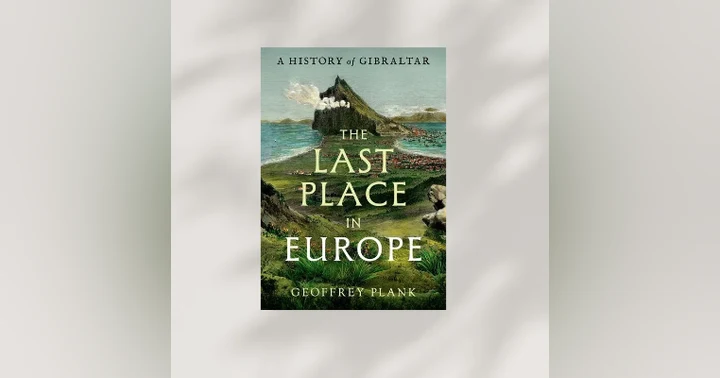
Gibraltar: The Rock Between Worlds | Geoffrey Plank, The Last Place in Europe


Historian Geoffrey Plank joins Jennifer Robin Terry to discuss his new book, The Last Place in Europe: A History of Gibraltar, and how one tiny territory became a crossroads of empires, cultures, commerce, and contested borders.
Gibraltar has almost no natural resources, yet empires have fought over this tiny territory for centuries. Its importance lies in its geography, where Europe meets Africa and the Mediterranean opens into the Atlantic. Geoffrey Plank traces this contested crossroads from Neanderthals and English privateers through British rule and World War II, exploring how centuries of migration, conflict, and imperial rivalry forged a distinctly Gibraltarian identity. The conversation concludes with Brexit, which has revived an old tension at the heart of Gibraltar’s history: the clash between political sovereignty and the practical need for people, goods, and ideas to move across borders.
In this episode:
- Strategic Geography and Resource Scarcity: How a tiny, water-starved peninsula with no inherent natural resources became one of the world's most heavily contested maritime strongholds.
- The Paleolithic Divide: What Neanderthal skull discoveries and ancient migration patterns reveal about the Strait of Gibraltar as an uncrossed barrier between Europe and Africa.
- Early English Privateering: How 16th-century ventures led by Thomas Wyndham laid the groundwork for centuries of British commercial and naval interest in North Africa and the Mediterranean.
- The Conquest of 1704: Why the British takeover during the War of the Spanish Succession was a violent displacement of the local population rather than an accidental imperial acquisition.
- World War II Air Base and Tunnels: Gibraltar's vital strategic role in providing essential air cover for Operation Torch and housing thousands inside subterranean limestone fortresses.
- Civilian Evacuation and Identity: How the wartime displacement of women and children to Britain fostered a distinct Gibraltarian identity separate from both Spanish roots and English rule.
- Protest and Self-Determination: What the 2004 human chain surrounding the Rock demonstrated about local resistance to Spanish claims and British diplomatic concessions.
- Brexit and Border Sovereignty: How modern European negotiations reshaped cross-border labor movement, regional economic trade, and financial transparency standards.
Featured Guest
Geoffrey Plank is a retired professor who taught history at the University of Cincinnati and the University of East Anglia. His most recent previous book, Atlantic Wars: From the Eighteenth Century to the Age of Revolution (OUP, 2020), was shortlisted for the Wolfson History Prize.
Buy the Book
Geoffrey Plank, The Last Place in Europe: A History of Gibraltar (Oxford University Press, 2026).
BONUS: Use my Bookshop.org links to buy the book and you get instant literary cred, while the author, this podcast, and local indie bookshops get actual financial support. It’s the closest thing to ethically justified shopping you’ll do all week.
***************
If you enjoyed this episode…
Subscribe on YouTube
Follow on Instagram, Facebook, or Bluesky
Leave a review here. Reviews and shares make a real difference in helping thoughtful conversations about history reach new audiences.
**History runs on curiosity…and occasionally, caffeine.**
The Clio Dialogues is independently produced. If you'd like to help support future episodes, consider contributing by buying me a coffee. Every cup helps keep new conversations coming.
***************
Affiliate Disclosure
Some links in The Clio Dialogues show notes are affiliate links. As a Bookshop.org Affiliate and Amazon Associate, I may earn a small commission on qualifying purchases at no additional cost to you. Those commissions help offset the costs of producing The Clio Dialogues, allowing me to continue bringing historical scholarship to a wider audience. Thank you for your support.
Editorial Independence
The Clio Dialogues supports productive, respectful, freedom of expression. My, or my guests opinions may deviate from each other or from yours -- and that's okay!
Books and products featured on this channel are selected because I believe they are relevant to the conversation and the knowledge is worth having.
00:00 - – Gibraltar: The Rock Between Worlds
04:07 - – Why Gibraltar Matters
05:00 - – Neanderthals and the Divide Between Europe and Africa
08:06 - – English Privateers and the Road to British Gibraltar
12:32 - – Gibraltar and World War II
16:55 - – The Making of a Gibraltarian Identity
21:54 - – Brexit, Spain, and Gibraltar’s Border
– Gibraltar: The Rock Between Worlds
Host, Jennifer Robin Terry
Hello and welcome to the Clio Dialogues, the podcast that links history with the present to help us better understand the world we live in today.
Host, Jennifer Robin Terry
I am your host, Jennifer Robin Terry.
Host, Jennifer Robin Terry
Gibraltar. For centuries, empires have fought over it, people have crossed through it, and nations have debated where it really belongs. Why has this tiny place mattered so much?
Host, Jennifer Robin Terry
My guest today is Geoffrey Plank, a historian and professor who retired from the University of East Anglia in the UK. He is the author of The Last Place in Europe: A History of Gibraltar, published by Oxford University Press.
Host, Jennifer Robin Terry
Hello, Geoffrey. Welcome to the Clio Dialogues. I've been looking forward to our conversation.
Guest, Geoffrey Plank
Oh, thank you. Yes, and thanks for having me. I'm looking forward to it too.
Host, Jennifer Robin Terry
So for our listeners who are unfamiliar with Gibraltar, I thought we might start with just a little bit of an introduction. I know that Gibraltar is rather small, right? Only about three square miles perhaps. It borders Spain, but it's actually a British territory. What do we need to know? Set the scene for us.
Guest, Geoffrey Plank
Well, basically, I first became interested in Gibraltar because it's a British territory. As you say, now it was a British colony that was taken from Spain by the British in 1704. My initial interest was all about how does that work? I mean, what are the British doings being a colonial power in Europe, in a formerly Spanish territory? And so a critical part of understanding why, at least in my mind, Gibraltar is interesting, is that you have this strange layering of a British colonial authority or a current British colonial past on top of a Mediterranean population. But the other thing, which actually, as I was working on the book, it came clearer and clearer is that Gibraltar is really at a central kind of border at the very southern end of the European continent, and it is in constant exchange with Africa, and it's a kind of context for seeing European relations with North Africa in a very dramatic way. And then it's also at the opening of the Mediterranean to the Atlantic. That's something that gives Gibraltar a very interesting sort of historical resonance because it sits at that borderline, two borderlines really between Europe and Africa and between the Mediterranean and the Atlantic. I was very interested in how the British ruled Catholic populations, and there is a way in which their policies towards the Irish or towards the Akkadians in Nova Scotia and other Catholic groups, that they followed a certain common pattern. And Gibraltar is overwhelmingly Catholic, it has been forever. But there's also a very large Jewish population that's been there since the British arrived, and that entirely complicates the whole story of sectarian relations and even the geographical relationships of Gibraltar to Africa. So that becomes you know an another important theme for me.
Host, Jennifer Robin Terry
And at least at one time there was also a sizable Muslim population.
Guest, Geoffrey Plank
This is when you go into the deep past of Gibraltar going before the British are there, which all which again I think it's actually essential for understanding or placing this whole history in context, that Gibraltar is supposed to have been, though this is all in the mists of time and kind of a legend, but it is the site where the Muslims who first arrived in Western Europe crossed over from Africa and landed literally next to the Rock of Gibraltar on their way to eventually conquering most of Spain. And that's another whole element of Gibraltar that's interesting. There are layers of myth and historical significance to a certain extent are thrown at Gibraltar. It may be literally true that the Muslims landed on the beach next to Gibraltar, but that doesn't make Gibraltar itself all that important except symbolically, but it becomes very important symbolically, and especially when you go to the later period of Muslim rule when they've actually started to settle at Gibraltar itself. That myth or that ancient story that this was the site of the first landing makes it a more you know symbolically important and resonant place. So yeah, so that's another whole element of the story.
Host, Jennifer Robin Terry
– Why Gibraltar Matters
Host, Jennifer Robin Terry
What is it about Gibraltar that seems to attract diverse communities? Is it is it the location? Is it the resources?
Guest, Geoffrey Plank
Well, you know, you say the resources, and then that's another huge element of this whole story, which makes it fascinating to me. It's like you say, it has been a fiercely contested place for several centuries. But there there are no resources there. There, I mean, there for a long time there's barely enough water to support a population. So the attraction is geography. And by the 14th century, there are people who are recognizing that it's a great place to service ships, and so it's all tied in with maritime commerce. It's located you know at this important strait. But that's something that continues right to the present day. That part of what's fascinating about Gibraltar, to think about it economically, is that it makes money absorbing commerce that's going somewhere else or whatever. People are coming in and out, but they're not staying in Gibraltar.
Host, Jennifer Robin Terry
You mentioned
– Neanderthals and the Divide Between Europe and Africa
Host, Jennifer Robin Terry
early on in the book Neanderthals. Can you talk a little bit about that?
Guest, Geoffrey Plank
That's part of the great fun of the book. I decided that I was going to write from beginning to end. And so as far as you know the the archaeological record goes, the Neanderthals are the beginning. There's no human before then. It's actually a very important site for Neanderthals for a couple of reasons. One is that the earliest found Neanderthal skull, and I'm always a little bit careful how I phrase this, because maybe one was found and nobody knew what it was and kicked it away, but the earliest ever found Neanderthal skull that's still available for scientists to look at was found in in Gibraltar. And I tell the story sort of a I think it's a slightly funny story, though in a way you can't blame them. The people who found it had no idea what they were looking at and sort of you know put it, oh, this is interesting, and put it aside, and it took 30 years before somebody came around and looked at it again and said, well, this is actually really something. Scientifically, Gibraltar is important as a place where these discoveries are made and where the whole archaeology really gets developed and it's still going on. There's important Neanderthal sites there. But the other thing that's interesting about the Neanderthal story is that it really does give you a deep sense of the significance of the Strait of Gibraltar as a geographical divide. And it's actually something that archaeologists are still wrestling with talking about the Paleolithic period, is that for some reason, and and nobody knows why, nobody, as far as we can tell, crossed the Strait of Gibraltar for hundreds of thousands of years. And we know that there were modern humans, Homo sapiens, in Morocco over three hundred thousand years ago. They get to Gibraltar, I don't know that we have a precise date, but something like twenty thousand years ago. And they get there by going around the Mediterranean on foot, not by crossing the water, and it's only a tiny little stretch of water. That's actually something that's quite mysterious because there are other places like Cyprus and like Australia, where Paleolithic people seem to have managed rafts and crossed bodies of water. So it's really not clear why neither the Neanderthals going south to Africa or the modern humans going north towards Iberia, why this never happened, but it didn't. One of the issues that really is important for my thinking about Gibraltar and why it is significant is this question of how real is that sense of a cultural and geographical divide between Europe and Africa? How solid is it? How grounded is it? How determined is it by geography? Even in going back to the Neanderthal period, it's it would it'd be tempting to say, well, this is all about geography, that nobody could do it, nobody could cross the water. But I'm not sure that's true. And so thinking about that issue, about why do we think this division between Europeans and Africans, Europe and Africa, why does it have such huge historical resonance? The answer to that has to be complicated. There is clearly something happening geographically that is dividing people from Africa and in Europe. But at different historical periods, that division has been larger or smaller or more significant or less significant culturally.
– English Privateers and the Road to British Gibraltar
Host, Jennifer Robin Terry
Well, one of the things that was really an unexpected moment for me was when I was reading chapter three and you mentioned Captain Thomas Wyndham, who was a privateer, an English privateer. He's actually one of my ancestors. That was fun for me, but more than that, I think he represents something larger in the English coming on the scene here. Can you talk a little bit about the age of exploration and the English? And what role did that play in England actually gaining power eventually in Gibraltar?
Guest, Geoffrey Plank
I think it's critical. And actually one of the things that's interesting about it. I mean, Thomas Wyndham arrives in the area in the 1540s, 1550s. He arrives in Morocco on land in the 1550s. One thing that's important, I think, for his story is that he's fighting the Portuguese on behalf of the he's actually all entirely for himself, and it but he's got British, you know, powerful British investors and he's raised a lot of money. And it's just this period where everybody is trying to get royal sponsorship to do their own. Sometimes it's plunder, sometimes it's trade. Actually, I think in this case, in Wyndham's case, he is trying to actually trade. Sometimes he is a he's a pirate too. But his main thing, and he actually writes about this, so I didn't I don't go into this in the in the book, but he's a because the Portuguese have established so much control over trade in Morocco and going down the African coast, he becomes a huge advocate of international free trade, more or less, or saying you've got to give us a share. He made it as far as Benin, and then there's a very dramatic account of this. That there's a dispute among the officers about should we keep going further or should we turn around. They're seeking spices and things. Do we have enough to go home? They keep on going down the coast and they all get sick and virtually all of them die, including Wyndham with much of his crew. There's a way in which people talk about the Wyndham career as fables of excessive ambition going one step too far and then failing. But thinking about it in the Gibraltar case, Wyndham actually did establish a pattern of profitable trade with Morocco that the English maintain really for the next 400 years. But I think when you think about Wyndham, what you get is this early diplomatic presence and a commercial presence in Morocco that continues.
Host, Jennifer Robin Terry
So what is the catalyst for the English taking Gibraltar in 1704?
Guest, Geoffrey Plank
I think it is important, going back to the Wyndham story and all of this, to realize that the English have been in the area for a long time, and there had been talk through the last several decades about the value of Gibraltar, the interest in Gibraltar. And what one thing that's interesting about that is when people talk about it, and they talk about it this way for hundreds of years, they say we want a outpost on the Strait of Gibraltar, and they're not necessarily focused on Gibraltar itself. So there's talk about taking the Ceuta from the Spanish, and there was this earlier effort of the English to colonize in Tangier, which they acquire from the Portuguese. And then there's by the time they reach Gibraltar, I mean, some of the people who come to Gibraltar up with the British force in 1704 were veterans of the Tangier colony, and so that they're all interested in getting an outpost in Gibraltar. There's another element of the story which most British imperial historians will say, and I think it's partly because they want to make the British acquisition of Gibraltar more benign than it was, to say that it was taken in the context of the War of the Spanish Succession and the English were fighting on behalf of the Habsburgs, and so they didn't arrive and say this is English territory, and they were actually part of an Anglo-Dutch expedition. They didn't come and say this is Dutch territory, they said this is Habsburg Spanish territory. Which is sort of true, but to understand how that resonates in Gibraltar's history and basically what it meant on the ground, you have to kind of recognize that there were virtually no Habsburg supporters in southern Spain at the time. And so when they come and say, "We are here on behalf of your Habsburg king," they were basically saying something that no one in Gibraltar wanted to hear. And one thing that comes through very clearly in the accounts, including the English accounts of the conquest of Gibraltar, it was actually quite brutal. All the Spanish inhabitants of Gibraltar fled. Some people want to claim that this was a sort of dynastic dispute, and the English shook the side of the Habsburg and they came on behalf of the Habsburg and sort of accidentally acquired Gibraltar. That doesn't really stand scrutiny because it was English and Dutch-led expedition, and it was basically treating the local population quite antagonistically from
– Gibraltar and World War II
Guest, Geoffrey Plank
the start.
Host, Jennifer Robin Terry
So I want to jump ahead now into the 20th century with World War II, because World War II seems to be kind of a turning point. And because Gibraltar was really strategic for the Allies, the airfield that they established there. Eisenhower had an office there. So can you tell us a little bit about Gibraltar in World War II and its significance to the Allies?
Guest, Geoffrey Plank
This is something that really matters to me a whole lot, actually. I don't say this in the book, but my father was part of the you know Eisenhower's force invading North Africa. He probably landed in Casablanca, so he probably never saw Gibraltar because a lot of the American forces landed on the Atlantic coast of Morocco and then went overland. But Gibraltar, even for the people who never saw it, was critically important because that airfield that you mentioned basically gave air cover for the Allied forces in 1942 who came to Africa. It was an amazingly quick and efficient operation. They landed in the French-ruled parts of Morocco, and basically the French pretty quickly capitulated to the Allies, and then they could move eastward within a few weeks. Eisenhower shifted his headquarters to Algiers. The other thing that's fascinating about this whole history, though, is that Franco, who was just coming out of the civil war in control of Spain. Spain was was devastated by the Civil War, and Franco was not in a strong position. He clearly favored the Nazis and considered allying himself with the Germans and the Italians, and there was a lot of fear that Franco would join the war on the side of the Nazis. He didn't formally do that, but it created a very strange dynamic when Eisenhower was in Gibraltar, because Eisenhower expected an attack and it never happened. That whole story is actually an interesting story about Spanish neutrality. It's a very, and again I've got to be careful there because Franco wasn't really neutral. Franco actually did, without publicly saying it, support the Nazis, but he did not formally join the war or actually attack Gibraltar or anything like that. Eisenhower was was also very careful about this. There was a small Spanish enclave in Morocco, and the Allies went around it. They didn't, they didn't attack the Spanish in Morocco, they landed in the French part and then proceeded you know around the Spanish territory to get to the bulk of the Nazi forces farther east. After the Americans had basically become the dominant force in the French protectorate of Morocco, they hold a conference there with Churchill and actually de Gaulle is late in coming, and Roosevelt sits down with the Sultan of Morocco and says, you know, I really think you should be an independent country. And so, and all of Morocco erupts and says, Whoa, you know, the Americans are on the side of decolonization. And that actually is a critical moment in triggering this whole global debate. I mean, it's a major moment in the whole debate about the collapse of empires and decolonization. And you know, on a certain level, the decolonization debate is still going on in Gibraltar.
Host, Jennifer Robin Terry
I was also impressed by the engineering feat of turning Gibraltar into a fortress, which I know it had been hundreds of years before, but to carve out tunnels from the Rock of Gibraltar was just incredible.
Guest, Geoffrey Plank
It's an amazing thing to see. And you know, and if they keep on working on the whole way they present that for tourists, but it's a stunning thing to see. They were planning to house tens of thousands of soldiers and provisions for them inside the mountain, you know, inside the Rock of Gibraltar. And those tunnels are still there to be seen. But you're like you say, that the whole process of digging into the rock started in the you know the Great Siege of the late 18th century. And those tunnels are also available for if you want if you ever go to Gibraltar. And in a way, they amazed me more just because of the technology that was available in the late 18th century. I mean, people spent years and years carving in the limestone to open up these tunnels. And they had very different purposes. The 18th century tunnels were designed to allow cannons at the top of the mountain to fire down on the Spanish if they were coming from the north. Whereas, like you say, the World War II tunnels were basically meant just to be basically a gigantic bomb shelter to sort of, you know, to give refuge.
– The Making of a Gibraltarian Identity
Host, Jennifer Robin Terry
So I want to talk a little bit about Gibraltarian identity, because you talk about during World War II, the civilians were largely evacuated, women and children especially evacuated from Gibraltar. And yet it seems like it created a stronger sense of being from Gibraltar and being unique in that sense. Can you tell us a little bit about that?
Guest, Geoffrey Plank
There isn't really one turning point where people in Gibraltar suddenly started identifying themselves as Gibraltar people. But if you compare, there's a big moment in the 1860s where various people started complaining about immigration policies in Gibraltar. And it was an interesting moment because there's a coming together of various groups to protest British policy, but they framed their protests mostly as saying, we are British, because they, you know, lived in a British territory, they were born in a British territory. So even though they were an interesting mix of people of Mediterranean heritage, they could assert themselves politically by saying we are subjects of the British Empire. At that time of the evacuation that you were talking about, for a variety of reasons the Gibraltarians start to say we are our own people. It's not just that we're not Spanish, and they've been saying that for a long time. But the governor, at a critical moment, didn't want women and children who had been evacuated to return to Gibraltar. But the women and children were on literally a set of rat-infested ships, and the health inspectors were saying that these people will die if you leave them on board. And the British governor said we don't want them back because we don't have room for them for military reasons or whatever. And then there's a sort of political mobilization against the British on behalf of the Gibraltarians. From that moment forward, there's a way in which Gibraltarian political identity is partly rallying around the Union Jack in Britain because it's protection against Spain and it's part of the history, it's part of what they generally are proud of. But it gets up sharper and sharper and with an edge, say the British are not treating us well. And another element of that, which I think is quite interesting, is that the Gibraltarian women mostly and children who were sent to England, many of them found life in England very alienating. They mostly spoke Spanish or Yanito, and they could not easily assimilate into English life. And they were, from their own perceptive, not treated well. They were housed in residential houses and and basically didn't have control over what they ate or how they lived, basically. And so there was a, there was a feeling of, well, we are different. Hard to not to avoid that sense that you're different when you're actually all being shipped away and and housed in segregated facilities, but also that we are not English. We come that becomes quite an important part of it.
Host, Jennifer Robin Terry
Let's jump forward to the twenty-first century. In 2004, on the 300th anniversary of the English capture of Gibraltar, thousands of people joined hands and formed a human chain all the way around Gibraltar. That's an extraordinary feat! What were they trying to say? And what does that demonstration tell us about Gibraltarian identity by this point?
Guest, Geoffrey Plank
That one is a particularly interesting sort of moment because there were various moments in the late 20th century where Gibraltarians were really rallying to protect themselves from the Spanish who were claiming Gibraltar as Spanish territory. And that's always a huge part of the issue, is we that we are not Spain, we do not want the Spanish to take over Gibraltar. But that had expressed itself initially in the referendum in 1967, where they basically almost unanimously say, we want to be British, we don't want to be Spanish. There's another referendum at the beginning of the 20th century where the labor government was proposing joint dual sovereignty with Spain. And so the referendum basically says, should we follow British labor policy and accept that? And almost unanimously they say, we don't like British policy, as part of this whole way in which the Gibraltarian political activism has a sort of anti-British edge to it. But by the time they're all holding hands around Gibraltar, I think it comes from that deeper history and a sense of Spanish threat and also a more recent fear that the British don't get it. Gibraltar, the Gibraltarians really do believe that they are they are separate people. But the other thing that's interesting about that is that it comes at a time when actually things are beginning to calm down, and that has a whole lot to do with the European Union. So that by the time you get through the naughtys, relations with the certainly with the region of Spain right next to Gibraltar have has have become much, much calmer. The whole temperature of the debates about Gibraltar just goes down. That moment of everybody holding hands and surrounding the peninsula is really almost like the the swan song of a moment of or a period of of activism, and that of course brings us to the whole Brexit thing, which you know blew all of that up again.
– Brexit, Spain, and Gibraltar’s Border
Host, Jennifer Robin Terry
That was my next question. Can you tell us how Brexit really complicated things?
Guest, Geoffrey Plank
You have to go back to understand that. And you know, and Margaret Thatcher is an amazing character in all of these stories because people think, oh, she's you know, she's this Tory, whatever. But she was actually she understood the European Union pretty well, I think. And when Spain was applying to join the European Union, but then the economic community, Margaret Thatcher said we have to give Gibraltar, all of the the people of Gibraltar, all of the rights of European citizens. There has to be open borders that Franco earlier had blockaded Gibraltar and it and it opened up the borders and laid the groundwork for much more peaceful, prosperous relations between Gibraltar and Spain. Brexit, especially in the first year after the referendum, just seemed to literally turn everything upside down potentially. Then the people in the Spanish government were saying this is our chance to reassert our claim to Gibraltar and take Gibraltar over. What's amazing to me in the subsequent years is again that the European Union and its principles of free movement and you know the single market and all of the rest of it really defines the terms dramatically about how Gibraltar would relate to Spain.
Host, Jennifer Robin Terry
For our listeners who are not familiar with this, we should say that when Britain with Brexit leaves the European Union, the Gibraltarians voted largely to remain in the European Union, but they had to leave because they were a British territory.
Guest, Geoffrey Plank
Brexit could have been massively worse for Gibraltar than it was. The Spanish didn't shut the border down and and they they didn't actually in any kind of very active way revive the whole claim that they've been pursuing in the United Nations, saying that the British had to sort of cede Gibraltar back to Spain. The Spanish didn't go down that route, partly because of party politics in Spain. But one thing that happened afterwards is that a whole new set of relations between Gibraltar and formerly between Gibraltar and the EU had to be renegotiated. And it had to be renegotiated in a way that satisfied the Spanish. And so that that's part of what's so interesting about this whole period is that the Spanish have leverage in a way that they had never had before to make certain demands about reform within Gibraltar. And it actually mattered enormously in the decade or so before the Brexit referendum. Well, basically since the late 20th century, Gibraltar had been increasingly involved in, what should I say, slightly shady economic transactions. One thing that's very clear, that's not in dispute, is it was and it has been for a long time a smuggling hub, but also money laundering and some very clearly illegal things going on and a lot of things that are just not very publicly disclosed, but intentionally not publicly disclosed. There are all sorts of provisions within Gibraltar for people who want to claim to live there so they wouldn't have to pay income tax. There's no virtually no income tax in in Gibraltar. During the post-Brexit negotiations, the Spanish demanded reforms, demanded transparency on financial transactions and basically a change in the business standards in Gibraltar. But the the European Union officially said that Gibraltar is no longer a suspect financial jurisdiction, that all sorts of very concrete things have been done to stop smuggling, including a kind of across the board sales tax in Gibraltar, which has the effect of equalizing prices of goods in Gibraltar compared to Spain. So there's some very concrete ways in which Gibraltar has changed its economy in the context of the post-Brexit negotiations, which I think matter a lot. I mean, I think it's quite a huge change within Gibraltar. But the aim of all of that is to be able to open up the border, and now the border is open more completely than ever before. If you can pass the customs at Gibraltar Airport, and you'll have to pass a Spanish agent, one of the things that's was part of the controversy, a Spanish customs agent. But once you're through that, you're in effect, for all intents and purposes, you're in the Schengen area, which means that you can just turn around, walk into Spain, or walk into Gibraltar, change your mind, go back to Spain. You don't have to pay customs. That basically it's an open border like any open border in the in the Schengen zone of the European Union. Another thing, but for context, is that a lot of wealthy Gibraltarians moved house and actually during that early 20th century, early 21st century period, started living in Spain, and a huge number of workers from Spain started crossing the border routinely to work in Gibraltar. And so the whole economy of Gibraltar relied on that easy movement of people back and forth north and south. And this post-Brexit agreement, in a way, will make that even easier and probably will increase the volume of traffic in both directions.
Host, Jennifer Robin Terry
To learn more about this and any book featured on the Clio Dialogues, read Clio's book reviews at www.cliodialogues.com. This has been the Clio Dialogues. Please like, follow, and subscribe. And join me again next time because history isn't finished with us.