Why We Drink: The Surprising History of Modern Drinking Culture | Lisa Jacobson
Wine with dinner. A beer after work. A whiskey to seal the deal. These rituals feel timeless, but they are far more recent than most Americans realize. In this episode of The Clio Dialogues, historian Lisa Jacobson explains how the repeal of Prohibition did not automatically restore alcohol's place in American life. Instead, breweries, wineries, distillers, advertisers, cookbook authors, physicians, government officials, and even Hollywood spent decades reshaping ...


Wine with dinner. A beer after work. A whiskey to seal the deal. These rituals feel timeless, but they are far more recent than most Americans realize.
In this episode of The Clio Dialogues, historian Lisa Jacobson explains how the repeal of Prohibition did not automatically restore alcohol's place in American life. Instead, breweries, wineries, distillers, advertisers, cookbook authors, physicians, government officials, and even Hollywood spent decades reshaping public attitudes toward drinking and creating the modern ideal of the "responsible drinker."
In this episode
- The stigmas attached to wine, beer, and whiskey after Prohibition
- How advertisers launched massive "consumer re-education" campaigns
- Why moderation became the new ideal of drinking
- How World War II transformed America's drinking culture
- Cookbooks, rationing, and teaching Americans to cook with wine
- The campaign for the "right to pleasure" and the "right to decent whiskey"
- What Hollywood films reveal about
Featured Guest
Lisa Jacobson is Professor of History at the University of California, Santa Barbara.
Buy the Book
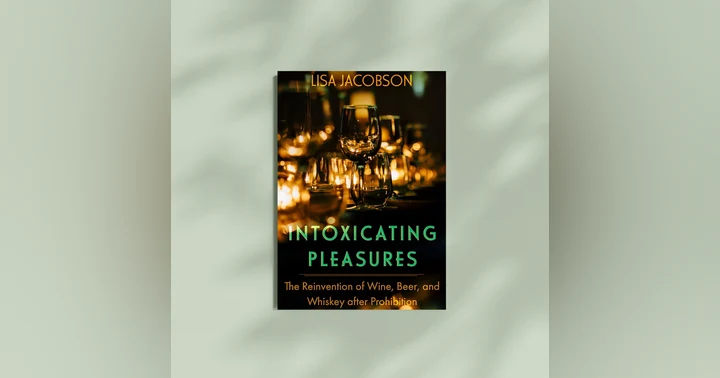
Intoxicating Pleasures: The Reinvention of Wine, Beer, and Whiskey after Prohibition
***************
If you enjoyed this episode…
consider following or subscribing to The Clio Dialogues wherever you listen or watch. Reviews and shares make a real difference in helping thoughtful conversations about history reach new audiences. You can also join the conversation on Instagram, Facebook, LinkedIn, or Bluesky.
**History runs on curiosity…and occasionally, caffeine.**
The Clio Dialogues is independently produced. If you'd like to help support future episodes, consider buying me a coffee. Every cup helps keep new conversations coming.
***************
Affiliate Disclosure
Some links in The Clio Dialogues show notes are affiliate links. As a Bookshop.org Affiliate and Amazon Associate, I may earn a small commission on qualifying purchases at no additional cost to you. Those commissions help offset the costs of producing The Clio Dialogues, allowing me to continue bringing historical scholarship to a wider audience. Thank you for your support.
BONUS: If you order through my Bookshop.org link ~ not only will you get fascinating books, but you'll also be supporting the author, this podcast, and local independent bookstores. A win for all!
Editorial Independence
The Clio Dialogues supports productive, respectful, freedom of expression.
My opinions are entirely my own and are never influenced by affiliate or guest relationships. My guests’ opinions are entirely their own and may deviate from mine or yours, and that’s okay. Books and products featured on this channel are selected because I believe they are relevant to the conversation and that the knowledge is worth having. I will not recommend products I do not believe in.
SPEAKER_00
Hello and welcome to the Cleo Dialogues, the podcast that links history with the present to help us better understand the world we live in today. I am your host, Jennifer Robin Terry. Wine with dinner. A beer after work. A whiskey to seal the deal. We think of these as timeless traditions. Think again. My guest today is Dr. Lisa Jacobson, a professor of history at the University of California, Santa Barbara. She's the author of Intoxicating Pleasures: The Reinvention of Wine, Beer, and Whiskey After Prohibition, published by the University of California Press. Hello, Lisa. It is so good to see you. Thank you for joining me here on the Clio Dialogues. I'm delighted to be here. Thank you for having me. I'm so excited to talk to you about your book. As I was reading it, I wondered have you ever noticed how much alcohol permeates popular culture, like television shows, movies, things like that? Yes.
SPEAKER_01
Well, as a fan of Mad Men, that is certainly a wash in alcohol. I've now taken to observing which brands are they featuring as my new project takes me into the middle decades or 50s, 60s, 70s, I've been paying more attention to that. So alcohol is all over the place. And I've recently taken a trip down memory lane watching classic films like Man in the Gray Flannel Suit. I just watched Rope, a Hitchcock film, which is essentially an hour and a half cocktail party. The cocktails and snacks are placed atop a cabinet that holds a murdered person. So the entire duration. So it's just fascinating to watch. I also was watching The Father of the Bride, the 57 version, with Spencer Tracy as the father, and he makes his way to visit the new in-laws, is kind of distrustful of them. But he realizes he's sitting down with kindred spirits when the in-laws open a cabinet, lift it up, and up comes this beautiful display of decanters and whiskey, all ready for mixing cocktails. So the bar cart is a standard prop. And of course, this happens most famously right after Prohibition with the Thin Man films, in which the detective duo Nick and Nora Charles witty banter over cocktail are completely drunk but never lose their wits and are able to solve dastardly crime. So yes, um, alcohol is all over, and you can really see a shift in sensibilities, just how much people were putting away as normal would knock a lot of us out.
SPEAKER_00
Yeah, yeah. I think you are going to be perfect for my new game. It's called What Are They Drinking? Okay. I want to invite the audience to play along because really this has to do with the way that alcohol functions as a cinematic shorthand that cues viewers. So a scene can start and you can know where it's going simply by the alcohol that is featured. So I'm going to tell you a scenario and you will tell me what they are drinking. So two businessmen sit in a wood-paneled office facing an impossible decision. One quietly opens a desk drawer, pulls out a bottle, and asks, Can I get you a drink? What are they drinking?
SPEAKER_01
Oh, it it has to be whiskey for sure.
SPEAKER_00
It is whiskey. It is whiskey, definitely. How about this scenario? The factory whistle blows. A group of coworkers files into their neighborhood bar, claiming the same worn booth they've occupied every Friday for years. What are they drinking? Beer for sure.
SPEAKER_01
Beer. Yeah, that's that's the working class Joe, solid, neighborly drink. Absolutely. Awesome.
SPEAKER_00
Yes. How about this one? It's Girls' Weekend. A group of upper middle class friends arrive at a stylish vacation rental. They uncork a bottle and settle into gossip, laugh, and relive old memories. What are they drinking? It's gotta be wine. It's wine. That's right. Just one more. Nulliweds share a kiss as friends and family rise for the first toast of the evening. What are they drinking? Champagne. Champagne. The great celebratory drink. Yes. Exactly. So these are tropes so familiar to us, but it wasn't always this way. If we think back a hundred years ago, we're in the midst of prohibition, and alcohol has stigma attached to it. And people would not readily associate these good times and friendship with these drinks. So I wonder if you could take us back to the 1920s, 1930s, and explain the stigma, specifically the stigmas that are attached to wine, beer, and whiskey. Yeah.
SPEAKER_01
There are different sets of stigmas that sort of energize the crusade for prohibition. And then prohibition itself starts a process of reshuffling the meanings of some of these beverages. But whiskey and beer suffer from their negative association with the saloon, which is the prime target of prohibitionists who see the saloon as a magnet for all kinds of vices. One thing for people, an image to hold in their heads is what did cities look like in the late 19th century? It's a saloon every other door. Advertising beer and a hot dog or a free lunch was an opportunity to socialize outside of work. But if you have so many clustered together, the profit margins are going to be very thin. And this created an inducement for saloons to enter side businesses like prostitution and gambling. And that's what made the saloons a real target of the Women's Christian Temperance Union, uh, the Anti-Saloon League. So that's one set of problems that whiskey and beer have to reckon with. Wine just doesn't have as much cultural traction in the United States. It's associated either with um luxurious living, this is what aristocrats drink, it's very fancy, or more commonly, it's associated with immigrants and drunken derelicts. And so, and that image of wine, I think, is one of the hardest to unravel after prohibition. But wine's image takes another hit during prohibition because of a strange little exemption in the Volstedt Act, which is the legislation that enables prohibition. And that was an exemption that permitted home winemakers to make their own wine up to 200 gallons annually. If you calculate that out, that's about three bottles of wine a day. So a huge amount. That is a lot of wine. Huge. And you can imagine that's entering bootleg channels. And then you also have sacramental wines, which tend to be very sweet. Some of them are quite potent. Often home winemakers would add more sugar to sort of boost both the potency and the sweetness, mask any defects. They got accustomed to a wine that was kind of raw, harsh. This was the beverage of last resort.
SPEAKER_00
The common perception of prohibition ending is that Americans were just wild in the streets, everybody's drinking now. But it sounds like there are some people who might be cautious about drinking because of these stigmas and because of the negativity that for years has been associated with it. Is it fair to say then that Americans, or at least some Americans, needed to be sort of educated on how to drink and what to drink and that it was okay to drink?
SPEAKER_01
Absolutely. One thing to keep in mind is that some of the images we have, Great Revelry after the repeal of prohibition, all of the flouting of the law during prohibition, that describes certain places in the country. But there were places, states and localities that went dry years before prohibition took effect, and that kind of stayed drier than most of the countries. After prohibition, because regulation of alcohol falls back to the states, a lot of them pass laws that make it very difficult to get access to alcohol or that turn specific counties and municipalities dry. So after the repeal prohibition, one in six Americans lived in a dry county and didn't have access to alcohol. All of the old stigmas still clung. And so the alcoholic beverage industry, working with an array of allies, home economists, physicians, scientists, cookbook authors, restaurants really worked to transform the image of alcohol and spent decades doing that.
SPEAKER_00
How much did advertisers have to do with this re-imaging of alcohol? Can you tell us about that?
SPEAKER_01
Yeah, advertisers certainly were happy to service alcoholic beverage companies. A lot of magazines during the Great Depression stayed afloat thanks to alcohol advertising. Advertising was absolutely crucial to reinventing alcohol, remaking its image. And in my book, I look at campaigns that were collective advertising campaigns. These were campaigns not to promote a brand, but just to promote the product itself. And that was really, you know, the starting place. But these were campaigns that were really massive consumer re-education campaigns. Part of what the alcoholic beverage industry had to do was teach Americans how to drink responsibly and how to move past their prohibition era excesses. So there's a sense that the cocktail habit actually had gotten out of hand and that you needed to teach Americans to sip their whiskey, not guzzle it, or sip their wine, or consume it with a meal. And so part of glamorizing wine while also trying to democratize it, was putting wine in settings where hosts and hostesses were enjoying leisurely meals, evenings of conversation and conviviality. And then there were instructions in the alcohol ads. These guests are sipping their wine, they're not bolting it down. So this was kind of a commentary on that cocktail habit that had gotten out of hand during Prohibition.
SPEAKER_00
When everyone's concerned that at any time the cops can come in and break up the party. So drink it while you can.
SPEAKER_01
Right, exactly. And drink it because it's a sign that you were daring and adventurous. And now you're drinking it because it's respectable and you're interested and invested in conversation. You're interested in entertaining at home. The Brewers Trade Association develops a whole advertising campaign during World War II, which promotes beer as something that belongs in every home. Settings in which beer appears in these ads are all American. I mean, sometimes it's beer at the Boston Pops concert, so very elevated, putting a sort of genteel spin on beer, but sometimes it's beer at the community roof raising or beer at the Western Barbecue. And those images are very striking to me because they really show this effort to associate beer with Americana, an effort to associate beer with small town nostalgia. And during World War II, a moment when there's so many separations of families, disruptions to the everyday, that sort of nostalgia for small town life was something that appeared in various realms of popular culture, but including in beer ads. Norman Rockwell agreed to endorse California wines. Oh, really? He was one of their endorsers, along with John Steinbeck and Hollywood actresses, Lynn Fontaine, Ty Cobb, the baseball player. They had an interesting roster of celebrity endorsers.
SPEAKER_00
This was because California wines didn't have the best reputation at the time.
SPEAKER_01
No, they really didn't. Some of this was the legacy of Prohibition itself. You had a few established wine industries that were still producing sacramental wines, but the rest of the industry is just destroyed. Sometimes early on, in the very first days, they were throwing wine into Cooperage that was moldy from long disuse. Or they didn't really realize that they needed to let the fermentation process complete before they bottled it. And so it exploded on store shelves. Those kinds of problems didn't last too long. The bigger problem was the home winemaking exemption in the Volstead Act encouraged the planting of certain kinds of grapes that could ship well across the country and that buyers really liked. But it didn't necessarily make the best quality wines. And until a solid demand for wine was created, which took a couple decades, it was too much of a risk for vintners and grape growers to replant over to the better quality wine grapes. So a lot of what ended up in the wine were things like Thompson seedless. Those are your table grains. So the quality of wine wasn't uh the best, but I think the image of wine was in many ways the bigger problem. This this very strange marketing problem of wine being both too highbrow and too lowbrow.
SPEAKER_00
That is a strange problem. So then enter the cookbooks. If you can't drink it, maybe cook with it. Is that the theory? That was the theory.
SPEAKER_01
One of the big stories of my book is that World War II is really the moment that transforms the image of all of these beverages, far more than the repeal of prohibition itself. The government has its own Food Fights for Freedom campaign, which is invested in rationing certain scarce foods, meat, butter, coffee, sugar, but also encouraging conservation. Use your leftovers. The government saying you don't have access to your favorite steak or beef dish. Make do with and learn to love organ meats. Um learn to liver and kidneys and things like that. Liver, kidneys, oxtails. So here's where the wine industry comes in. The California wine industry says we are an ally of the government in this Food Fights for Freedom campaign because we're gonna make complying with these onerous rationing and conservation regimes easier. And so the California wine industry says, you don't like that cheap cut of meat? Use wine, and it'll tenderize it. You think oxtails don't taste good? Well, here's a recipe for oxtail soup that uses wine, a one-pot cooking, spaghetti with wine sauce, all sorts of fish and wine. What they're offering to Americans is something that is very different from one of the messages they constantly hear, which is just make do. This is just for the duration. And the wine industry is saying you don't have to make do. You can actually turn your meal into something that's fit for company. That's food fit for kings, is one of the slogans they have. And so they are teaching Americans to cook with wine, and of course, reminding them that if you cook with wine, you should also drink a glass of that wine with your meal. So they're teaching this new kind of culinary tradition. This gets picked up by wartime cookbook authors.
SPEAKER_00
So, World War II, this was really a fascinating part of your book where you talk about this fighting for the right to pleasure and that alcohol is a part of your right. Tell us about that.
SPEAKER_01
This whole idea about the right to pleasure, even the right to drink, is something that comes in fairly late in the game. What happens in World War II with these big advertising campaigns is that the brewers, the vintners and the distillers all make this case in slightly different ways about the right to pleasure. And some of that's done by vintners and brewers saying wine and beer are morale boosters. This is good for the war. This will cheer up war weary souls. This is the just reward for a long day in the defense factory for all the extra work Americans are doing for the war effort. The other thing the brewers in particular do is pick up on the language that is embedded in official government propaganda, promoting tolerance, ideals of cultural pluralism, freedom of choice, and connecting that to beer. This is part of our heritage of freedom. It's part of the spirit of tolerance that separates us from the fascist enemy. And in some ads, they were quite explicit about that. How so? In this freedom-loving land, we love beer belongs. That's the language that circulated. The whiskey story is quite an interesting one in World War II because the entire industry converts all of its production from beverage alcohol to industrial alcohol, which is an essential ingredient that you need to make smokeless gunpowder and synthetic rubber. Early in the war, the whiskey makers are thinking, well, we're in just a wonderful position here because we have a huge inventory of aging whiskey on hand. So we can both sell to civilians and be patriotic distillers. Unfortunately, what happens is that with bigger wartime paychecks, a lot of Americans decided to trade up. They're trading up from beer to whiskey. Whiskey had more prestige than wine or beer. Whiskey went into cocktails. It was the favored beverage, especially by men. And so as a result, you end up with whiskey shortages. Liquor stores that don't have a lot of what everybody wants, which is whiskey, say, we'll give you your bottle of whiskey, but you've got to buy a lot of this wine, which they had a harder time unloading. And that, you know, doesn't do wine any favors uh for its its reputation either. Wine becomes the freebie. Yeah. And it's Not the retailers' fault because the wholesalers who are distributing it are also putting the pressure on the retailers saying, we'll give you a box of whiskey, but you've got to take three of wine. And so it it just creates a huge, a huge problem. And so in response, there is a campaign for a whiskey holiday, or sometimes called a whiskey furlough. Free the whiskey industry, give them a reprieve from war production of industrial alcohol, allow them to go make some beverage alcohol so we can revive the supplies. And the distillers are savvy enough politically to know we can't make this argument ourselves without looking selfish. But they have plenty of allies, tavern associations, the society of restaurateurs who are willing to make the argument for them. The piece of information that I found the most fascinating was that they invoked the right to decent whiskey. Again, this rights language to say we need to give this industry a temporary furlough from wartime production. What's fascinating about the story is that the whiskey distillers were eventually granted their reprieve. They got three of them at a time when most other industries who were making similar types of arguments were denied.
SPEAKER_00
So Americans' shoes are wearing out and they can't replace them, but they can get whiskey again. Right. Exactly. Interesting. So I want to bring it back to where we began with alcohol in entertainment and in specifically what people are seeing on the big screen. In the epilogue, you do a little analysis of a couple of post-war movies and the place of alcohol in those movies. Do you think that Hollywood in the post-war years was actually a part of this movement to redefine and reinforce what had started in the 30s and in the 40s, specifically during the war?
SPEAKER_01
The message that distillers, brewers, and vintners hit over and over and over again was the importance of drinking in moderation, that the new ideal drinker understood how to drink in moderation, how to avoid that one too many. The three films I look at, The Lost Weekend, which is about an alcoholic, a bender that lasts five days, the best years of our lives, which is about returning veterans, and then It's a Wonderful Life, they come out in 45 and 46. So they're right at the conclusion. And I wanted to see had these messages that these industries spent millions of dollars promoting during the war, had they penetrated the popular consciousness? Were these messages being echoed in ways by parties that had no vested interest in doing the industry's propaganda? And in those three films, you did see that kind of reinvention of the image of these beverages really take hold. The Lost Weekend is a really fascinating case because here you have a story about an alcoholic on a bender. It doesn't present alcohol in the best light. Don Burnham was the opposite of everything the ideal drinker was supposed to be. He was financially insolvent. He didn't pay his bills. He stole money to buy alcohol. And when he goes into a store to order alcohol, you know, he's asked what brand, he says, I don't want any of that shishi stuff. Give me the cheapest. He was drinking for a fact, not for the pleasures of the whiskey itself. And for Seagrum, that was the message they wanted. Seagrum had launched a moderation campaign, a set of ads that ran actually for decades, said, you know what? We think this sells an advantageous message for us, and we're gonna promote the hell out of this film. And so they take out big ads with congratulating Ray Milan for his Academy Award-winning performance as the lead Don Burnham, the alcoholic, and say, go see this film, it's very important. It reinforces what we've been telling you all along. Alcohol didn't suddenly become respectable upon the repeal of Prohibition. This was a hard-fought battle to reinvent the image of alcohol to create a new ideal of the moderate drinker. This was a kind of persuasion that involved a vast network of home economists, physicians, scientists, cookbook authors, restaurants, the Roosevelt administration, the military. It's a story that really shows how international crises like the Great Depression and like World War II really were central to alcohol's cultural reinvention.
SPEAKER_00
This has been the Clio Dialogues. Please like, follow, and subscribe. And join me again next time because history isn't finished with us.