Before the Creator Economy: How Fans Made Manga a Global Phenomenon | Andrea Horbinski
Episode Description What if one of the world's most influential cultural industries wasn't built by publishers or artists alone? Today, manga is a global phenomenon. It has inspired blockbuster films, anime, video games, conventions, cosplay, and a multibillion-dollar merchandise industry. But according to historian Andrea Horbinski, manga's remarkable success cannot be understood simply by studying famous creators or bestselling titles. Its history is also the story of ordinary readers who r...


Episode Description
What if one of the world's most influential cultural industries wasn't built by publishers or artists alone?
Today, manga is a global phenomenon. It has inspired blockbuster films, anime, video games, conventions, cosplay, and a multibillion-dollar merchandise industry. But according to historian Andrea Horbinski, manga's remarkable success cannot be understood simply by studying famous creators or bestselling titles. Its history is also the story of ordinary readers who refused to remain passive consumers.
In this episode, we explore how children, amateur artists, and devoted fans shaped manga from its earliest decades, helping transform it from political cartoons into one of the world's most influential forms of popular culture. Along the way, we discuss the modern superfan economy, the blurred line between fans and creators, the rise of dōjinshi and Comiket, Osamu Tezuka's revolution in storytelling, and why manga's history offers surprising insights into today's online fandoms and creator communities.
In this episode
- Why manga's success has always depended on fans, not just creators
- Why reader demand kept Norakuro alive and transformed the industry
- How World War II nearly destroyed manga, and why readers brought it back
- Osamu Tezuka's role in expanding manga beyond comedy into tragedy and complex storytelling
- The emergence of gekiga and manga for older readers
- The gendered differentiation of manga in the postwar period
- The Showa 24 Group, Takemiya Keiko, and the reinvention of shōjo manga
- The historical roots of fan fiction, shōnen’ai (Boys' Love), and dōjinshi
- How Comiket revolutionized the relationship between fans and professional creators
About the guest
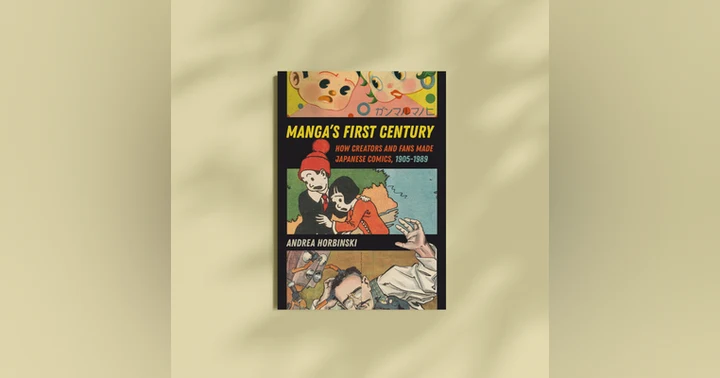
Dr. Andrea Horbinski earned her PhD in modern Japanese history with a designated emphasis in new media from the University of California, Berkeley. She is the author of Manga's First Century: How Creators and Fans Made Japanese Comics, 1905-1989. She won the 2026 Will Eisner Comic Industry Award for Best Academic/Scholarly Work.
Buy the Book
Andrea Horbinski, Manga's First Century: How Creators and Fans Made Japanese Comics, 1905-1989 Bookshop.org or Amazon
Also mentioned:
Marc Steinberg, Anime's Media Mix: Franchising Toys and Characters in Japan Bookshop.org or Amazon
If you enjoyed this episode…
Follow The Clio Dialogues wherever you listen to podcasts, leave a review, and share this episode with someone interested in American history, constitutional law, immigration, or the history behind today's headlines.
**History runs on curiosity…and occasionally, caffeine.**
The Clio Dialogues is independently produced. If you'd like to help support future episodes, consider buying me a coffee. Every cup helps keep new conversations coming.
***************
Affiliate Disclosure
Some links in The Clio Dialogues show notes are affiliate links. As a Bookshop.org Affilate and Amazon Associate, I earn from qualifying purchases. In other words, if you purchase a book or other eligible item through one of these links, I may earn a small commission at no additional cost to you.
If you order through my account on Bookshop.org, not only will you get fascinating books, but you'll also be supporting the author, the podcast, and local independent bookstores. A win for all!
Host
Hello and welcome to the Clio Dialogues, the podcast that links history with the present to help us better understand the world we live in today. I'm your host, Jennifer Robin Terry.
Speaker
How did fans turn manga into a multi-billion dollar industry? One Dojinchi fan-made comic at a time.
Andrea
I think you really can't understand manga without understanding and talking about Dojinchi.
Host
My guest today is Andrea Horbinski, author of Manga's First Century: How creators and fans made Japanese Comics 1905 to 1989. She's a winner of the 2026 Will Eisner Comic Industry Award for Best Scholarly Work.
Host
It's so nice to see you. Thank you for joining me on the Clio Dialogues.
Andrea
Thank you.
Host
Your book, Manga's First Century, is largely about the ways that manga fans contributed to the medium's growth and popularity in the 20th century. Recently, there's been a lot of attention in the media to the super fan economy and the influence that these highly engaged fans exert over comics, fashion, the entertainment industry generally. Because of that, these industries have changed their marketing focus, and they're realizing that they really need to engage deeply with these super fans. I'm wondering before we dive into the history of manga, can you tell us what you have observed about manga super fans in the 21st century?
Andrea
That's a good question. I think super fandom has been a thing in manga and also in anime circles for a long time. Arguably, anime has really been uh sort of based on this kind of super fan economy through the notion of the media mix where there's a manga that's either the basis for or an adaptation of an anime. The anime itself will put out expensive Blu-rays. If it's popular enough, there'll be events, cafes, pop-ups, sometimes even musicals, of course, movies, if it does well enough. So, really, this whole model is sort of predicated on the idea that the more money is out there to be made, the more money you make. This media mix idea, as people like Mark Steinberg have written, really has been the foundation of anime consumption and has also influenced manga as well. So, super fans in that sense have been a big part of manga and anime for a long time. And if you go to places in Tokyo where fans hang out, you'll see female fans, for example, with like these huge Ida bags, hope bags with clear plastic windows in them, and they'll just have like 20 or 30 of one merch item of their favorite character just repeating across the whole bag, like what, 400 yen a pop. But one thing that has happened is that sort of the shift to digital media has changed some of the economics of this. So manga sales in physical form are declining slowly but surely. Magazines have also been on a decline over the past sort of 20 years. Manga and anime are still trying to sort of chase that super fan money, chase the committed fan money. But yeah, it's gotten a little harder because of digital media for sure. So one thing they've done is sort of get more serious about looking abroad for more money, as well as finding ways to let people who don't live in Japan order merchandise from Japan, for example, whether that's directly through things like buying figures or sort of more indirectly, such as licensing anime to uh streaming companies or you know, working with streaming companies to produce original anime, stuff like that. So one thing they've done is sort of get more serious about looking abroad for more money, as well as finding ways to let people who don't live in Japan order merchandise from Japan, for example, whether that's directly through things like buying figures or sort of more indirectly, such as licensing anime to uh streaming companies or you know, working with streaming companies to produce original anime, stuff like that. In terms of catering to taste, um that is also that I think is actually one thing I talk about in the book, maybe is that uh anime and manga, and manga in particular has been sort of better at that in some ways than a lot of sort of um, you know, US media companies, perhaps. Um manga has has seemed to have been better as an industry at following where people want to go more quickly.
Host
A lot of times media will categorize audiences as passive consumers, but your book counters that. You say that audiences are actually really active agents in the development of entertainment. Can you take us back in time to the point where you see manga fans actually starting to become these active agents? When was that? That's a good question.
Andrea
I think a good spot to think of it as sort of a turning point is probably the 1930s. Manga started in 1905, roughly. Um, and it was popular then, but it was solely political satire. Um, it was really kind of aimed at adults, uh, you know, this sort of small tranche of people who were like highly literate and also highly engaged with politics. In the 20s, people start to create manga for children as well, as part of the creation of children as consumers in Japan at around the same time, was part of growing commercialization. But in the 30s, you start to see both like this explosion of children's manga um in children's magazines and then also outside of children's magazines as well. So one thing that happens is that uh Kodansha, which is then and now the biggest publisher in Japan, they have these three children's magazines. Um, and one of them, Shonen Club, is the flagship that produces manga every month. And the most popular is Nora Kuro. It sold over a million copies in hardcover book form, um, had massive success with movies, merchandising, children singing the uh theme song at school, in the street, you know. So the preferences of the audience in particular really played a role in Nora Kuro, for example. At that point, it was normal for stories of manga to end after one year at most to keep things fresh. But Norakuro actually lasted for more than 10 years because they received what they called mountain of letters from children from all over the empire, both inside and outside Japan, being like, you can't cancel Norakuro, we want more. And so Konancha listened. They had more Norakuro, they had more Takawa cartoons. So, really, this expansion of children's manga was was driven by child interest in a very direct way. And Akahon, manga aimed at children, these sort of fly-by-night parody works, also uh grew up to fill that insatiable uh need for more manga among children. And unfortunately, like actually the popular was what drew the attention of the censors in 1938. Uh, government censors at the time saw manga not as promoting uh the values of the empire or militarism, which was sort of the charge against Norakuro in the post-war period, but they saw it as promoting consumerism and commercialism and encouraging children to be consumers and not good little imperial subjects. So alcohol manga was was choked off and sort of made to conform and serve as a vehicle for either sort of propaganda or science education, which was you know seen as sort of manga for the empire. Um, and then early in the 40s it was choked off through paper rationing. Uh and children's manga came in for the same treatment. Uh so serialized manga was banned, Norkura was ended summarily uh in October of 1941. By the spring of 1945, most manga publications have all ceased.
Host
So then it sounds like World War II is kind of a low point for manga. What gets it going again and how do fans play a role in that?
Andrea
Yeah, I mean, you would have thought that manga was sort of over. By July of 45, like everybody has either died or been drafted or evacuated Tokyo in terms of the industry. But really, it came back extremely quickly. The first uh issue of manga magazine in Osaka was dated September of 45. So, you know, what brought it back was people wanting manga. There was the the guy who went on to publish Garo magazine in the 60s, him and his brother started selling manga in 16-page chunks, so they would tear magazines up and they would sell manga in these chunks in the black market in the soxa. They started two days after the surrender. And like in his memoir, he said like people would like see it on their on their table or their blanket, like manga, and like buy it immediately. Because there had been a hunger for manga during the war on the part of readers too. Tezuku Samu talks about when he was a kid during the war and before, um, he had this huge manga library that his parents bought for him. And he started like lending out books to other people at his school. They would all come over on Sunday to his house and read books, and this eventually got to the point where he didn't he wasn't bullied anymore because he was like the manga lending library for the school, so he was like, ah, that was the blessing of manga.
Host
I love that story in your book. Tell me about the appeal of manga. Why did people want to bring it back?
Andrea
The raison d'tra of manga and the justification was that it made people laugh. In the 30s, when people are trying to defend manga against censorship, they're trying to sort of differentiate manga from other forms of art, and also trying and failing to argue to take manga seriously is fine art. They'll say, Oh, manga makes people laugh, you know, like it helps people bear sort of like the difficulties of modern life. Laughter was the justification, and that was seen as, you know, like a good thing that it made people laugh, that it was humorous. And that was what people wanted after the surrender for sure. Over the course of the 1950s, uh, children's manga really sort of becomes like the mainstay of the medium and becomes more and more popular. Another thing that happened in the 50s, and this is because of Tezuka, was that uh, you know, manga became not solely about laughter. And this deserves to be recognized. Uh like Tezuka's very famous as the god of manga. Most people, when they're asked, will say, like, oh, he introduced cinematic motion into manga, which is not entirely untrue. He did break down the image into this sort of more movie-esque flow, but he didn't do that alone. Um, at the same time, in the post-war period, people who had been animators by training entered manga because of labor strikes and ongoing labor disputes at the largest animation studio in Japan. And so they had already been practicing this animation-style breakdown of motion. But Tezuka also really wanted manga to be about tragedy. He wanted it to encompass the full range of human emotion in stories. This was pretty radical, uh, honestly, at the time. He got a lot of flack uh for it from senior figures in the industry who thought that children's manga should be like bright and funny and cheerful and make children laugh, and that this was sufficient. But in the late 40s, he did a manga version of Crime and Punishment, which it's kind of a trip to read a version of Crime and Punishment in Pesca's very 1930s-esque style. He also did a manga called Um The Mysterious Underground Men, which features this boy hero and also this rabbit character. Mimio, Mimio can talk and think like a human. It's not entirely clear like how that happens. Like some sources call Mimio a cyborg, and I'm like, this kind of scene's like forced evolution. I don't know. Whatever. Mimio is this tragic figure who is not accepted among humans and ultimately dies, this actually kind of Christ-like death. Children's manga protagonists had not ever died before. People found that like extremely shocking that Tuzako would kill off Mimio two pages from the end of the story. Tragedy, you know, sort of a bad ending or and a non-happy plot. Those were other things that um sort of the Geki Ga crowd, this group of younger creators who wanted to draw dramatic pictures is what Gekiga means, but they also meant it in a sense of like harsh. They had a lot of sort of noir plots. And in a lot of ways, they sort of took Tezuka to like his logical extreme, this notion of it's okay to have a bad ending in manga.
Host
So these darker themes were embraced in the post-war period. Was that just with children's manga, or do you start to see more of a focus on adult manga during this time?
Andrea
Yeah, so this is a thing that was sort of a subject of controversy at the time. This is like the late 50s at this point. Gekiga really is sort of linked to the Kashihon book market, so rental book market. The Kashihon category, especially in Osaka, did give a lot of creators a way in, including these gekiga types. But one thing that they were arguing in their sort of manifesto and their arguments for gekiga was that they themselves were not children. They were like early 20s at this point, and they wanted to keep reading manga, but they didn't want to read socio-political satire that was geared at adults, and they didn't want to read children's manga. So they wanted to read dramatic stories that were aimed at adults in terms of subject matter. But because Kashi Honya are so accessible to children, there's this persistent concern amongst educators, parents, sort of banned bad books activists. There's this persistent concern that children are reading Gekiya and that their brains are being warped by this. That was a real rallying cry for this banned bad books movement, which went on for quite a long time, honestly. There were like book burnings into like, I think the last one I found documentation for was in 63 or 64.
Host
But that starts to change in the 1960s, doesn't it? Uh, was this the period when children's manga starts to be differentiated by gender? Uh manga for boys becomes different than manga for girls.
Andrea
A lot of things happened in the 60s. Manga changes from this old sort of monthly magazine model, goes to a weekly magazine model, um, children's manga, which was aimed at sort of children generically before, now splits into boys' manga, shonen manga, and shoujo manga, girls' manga. Shoujo manga had sort of existed before, but it was a subcategory of children's manga. Now that's broken out as a separate thing, and there's this rigid gender separation, which goes along with this emergence of a new model in Japanese society of the housewife who works in the home and the salary man who works outside the home. So manga really sort of like sutures itself to that ideology. Um, so at the same time as that's happening, you also get more and more young people are finishing high school and they're going to college. They want to keep reading manga, but they want manga that's more suited to their tastes. To capture that college student market, as well as to cater to creators who themselves are older now and want to tell more mature stories. The Seinen category emerges in '67 and really sort of reaches its kind of full potential with I-68. Seinen as a category also sort of allows mainstream Tokyo manga to sort of absorb like Geki Ga and Geki Ga creators. It means young men as a category, and at the time it it launches, it really is sort of very much aimed at young men. And at the same time, Shojo really is kind of left behind for a while. It's kind of stuck in an older model. There's a lot of things that young women readers and creators don't like about it. By the early 70s, that starts to change with the emergence of the Showa 24 group, who are these young women born in and around 1949, and they really want to start saying different things in manga for girls. And they really start pushing the category in terms of uh artistic expression as well as subject matter.
Host
So this notable group of women start to illustrate manga. When was that? The 1970s?
Andrea
A lot of them had entered the industry in the late 60s, so even before they had graduated high school, in a lot of cases. So like 67, 68, 69 is when they are starting to enter the industry. They wanted to do manga, but they they did not like shojo as a category.
Host
They didn't like shojo? Why was that? Did they think it was too cutesy or too aimed towards children?
Andrea
In a lot of ways, it was kind of stuck in the old children's manga paradigm, like international, but like kind of this vague European setting. A lot of it was romance stories, but it was very generic. Even the character designs, the the idea among editors is that girls were nervous about bodies, so the character designs were very weightless in a weird way. So the manga would end with a kiss, basically, or there'd be a kiss, and then on the next page, the girl and the boy like they'd be a baby, and you're like, but what happened in between? And the stories were very generic and interchangeable. Like if you've read one, you sort of read them all, was another common charge. Um, Takumiya Keiko, who was one of the leading creators of this sort of shonenai group, you know, she has written a memoir and she talked about wanting to explore what happens between that kiss and the baby, basically, also wanting to portray actual human love, including physical love. And she and a lot of the other creators um were interested in as well, sort of portraying um relationships between boys. Um, there's a subcategory, it's called Shon and I, um, now known as boys' love. They wanted to portray these relationships between boys, partly because for a lot of them, it was sort of easier to portray relationships between boys than it was between a boy and a girl. So boarding school settings are very common in early Shon and I. So you get this like same gender environment. Um, there were also people in the 60s who were writing about the beautiful boy theories about sort of like same-sex relationships. So, yeah, partly to get around restrictions on girls in Japanese society at the time. It's still an era when young women traveling alone was frowned on slash like weird. It's still an era when boys and girls don't necessarily mix very much in uh sort of social settings. Taki talks in other places as well. Like, you know, she wanted to wear certain types of clothes, but like couldn't, but she could put her boy characters in those clothes. She wanted to go places and do things, and as a woman, it was difficult, but boy character could go those places and do those things. So was this an expression of feminism? In some ways, I would say yeah. At the same time as as Sean and I is becoming a thing in manga, you get the rise of uh what comes to be known as slash in sort of English language fandoms, you know, Kirk Spock with Star Trek is really sort of a major beginning point there. Imagining relationships between male characters, you know, is not is not unique to Japan at this point in time. It is a kind of feminism in terms of wanting more freedom as as women. But again, also like they also, a lot of them also just were interested in like interactions between boys, you know, as as a thing that they were interested in.
Host
Is it fair to say that at least some of these storylines came from the same sort of place as fan fiction that we see today?
Andrea
Yeah, unequivocally. Unequivocally for sure, uh, as someone who's written a lot of that fan fiction. The other thing, too, is that part of the reason it was popular is that there are also, you know, queer fans of manga who are reading it, um, and see in these stories, you know, um, sort of a new representation of people like them that they hadn't before. So they're not a majority, but they're definitely there. That reception was uh very important uh as time went on, um, both socially and in terms of manga as well, in terms of the emergence of boys' love as a commercial category in their 90s, as well as uh kind of the semi-professional category um in the 80s in like magazines that were on a submission model, and also Dojinchi through what became known as Yoi, which uh was kind of like Shonen Eye but for established properties in in some respects. Um Captain Subasa, which was a soccer manga, and then an anime in the mid-80s. That was a big uh big Yaoi Dojinchi fandom. That was really kind of one of the major ones that made so you know, not just like original manga, but then you know, doujinchi amateur comics that were fan comics of existing anime manga. That was a big turning point for that uh becoming a thing.
Host
When I started reading your book, I really wasn't familiar with manga at all. But I knew anime. I knew Sailor Moon and of course Pokemon, um, Avatar, Last Airbender.
Andrea
Well, Avatar is not anime, it just looks like anime.
Host
Oh well, see, to my untrained eyes.
Andrea
It was made in America.
Host
It was a very enjoyable series, though.
Andrea
It's great, it's great. I mean, it is a good example of like outsourcing because actually, you know, a bunch of the production was done in Taiwan. Really? Yeah. A good chunk of the production is done in Taiwan, as has been normal in animation since it became like a thing in the 50s and 60s. Like Scooby-Doo and other American cartoons are being outsourced to Japan. Anime, about a year after it started, starts getting outsourced to Korea.
Host
Really? Interesting.
Andrea
Yeah. Animation costs too much, unless you're Disney or Toewei making one film every three years.
Host
So then my question about anime is when did it hit the scene and what was its impact on manga?
Andrea
New Year's Day 1963, with the broadcast of the first episode of Astro Boy, um, which is Tezuka's creation based on his uh very popular 1950s manga, Tetsuanotamu, Astro Boy. It had actually also been adapted to uh live-action TV before that, but it wasn't very good. You know, the special effects in the TV version were not so good. So Astro Boy was really sort of this like epochal happening where it was a runaway hit. It was extremely popular. Tin Toys and other sort of collectibles are based on Ask Your Boy. You know, but they are a huge boost to the companies that are working with the studio. A lot of manga actually go into animation. Slowly but surely, you know, like can this be adapted to an anime becomes a question that people ask about manga. So there's three animated TV series in 1963. I think it's by 65, there's like eight per year, something like that. So, like over time, you get more and more anime produced. Um, and nowadays people actually talk about like the overproduction crisis, uh, partly driven by these like streaming deals. Manga becomes linked to anime, it becomes the source for anime. People like Mizuki Shigeru, who really was like very poor for a long time, you know. His big hit, uh Gay Gay Gay Nokitaro, gets adapted to an anime the first time in the late 60s. I think it's on like the sixth anime now, you know. So people like him start seeing success that they really hadn't like anticipated. And then also the demand for anime eventually does sort of change the relationship between manga and anime. Like for the first like 15 years or so, anime is actually called like TV manga. Terebi manga is is what it's called. It's manga that's on TV by the late 70s. Studios kind of started to have a contentious relationship with the people who had been funding it before, which had been toy companies. So uh toy companies really kind of reached the end of the line as like a sole sponsor of anime. Um, and through the emergence of independent studios in the 80s, anime settles into what's called this production committee model, where a bunch of companies will come together and then they'll agree to make an anime and then also have the anime featured in their products in some way. So toys, but different kinds of toys, and the toys are not driving the storyline. The toys are adapted from the storyline, a key difference. Um, but by like the mid-80s, manga is not necessarily the place that anime always starts from anymore. Now it's kind of like, oh, it could be an anime first, and then we'll do an adaptation, adapting the manga, you know. So so that becomes not fixed. Um, as part of this need for characters to be legible across media, the art style of manga changes pretty, pretty radically. To make uh things for anime purposes and for merchandising purposes, you know, if you want the merch to look like the character, because if it doesn't, then like what's the point? People aren't gonna buy it. So you need a simplified character design, uh, you need a simplified line in in the character designs, uh, you know, much less sketchy, uh like as in like actual like pen sketch, like much more sort of just decisive line work. The mainstream of manga art style really sort of changes in the 80s to accommodate that. And that's a that's a big change. Manga looking more like anime, it wasn't a preordained development, but it does look more like anime. Uh, and that's a big reason why is this need for the characters to be able to be seen and be recognized in no matter what medium they're in.
Host
So, bringing it back to where we started, let's talk about conventions. That's where you really see the super fans. Tell me about Comiket. That was a major transition for manga fans, wasn't it? Can you tell me about that?
Andrea
Yeah, um, so Comiket is short for Comic Market. It started in December of 75. It has been, and before the pandemic, it was the biggest fan event in the world. So the summer 2019 version had 750,000 attendees over four days. The comic market starts because people who are college students, super fans of manga, they're like in what they called circles. They're in these like manga fan groups. They are dissatisfied with what's called the Nihon manga taikai, the Japan manga convention, which started in Tokyo in 72 and was really seen by its detractors as being too deferential to professional creators, not very interesting. I think it was it wasn't Yonezawa. It was one of his compatriots who was like, people didn't schlep all the way to Tokyo just to talk about cyborg 009, which has maybe an unfair reputation for being a little boring. Then the Homaga Taikai organizers banned people for sort of nebulous reasons, um, including some members of this group. They also didn't allow people to sell their zines, their dojinshi. So the comic market people decided that they would make an event where selling dogin chi was the point. They said dojinchi are a means of communication between fans. Everybody is allowed to sell their doujin chi. They thought the montai as a problem, they thought mantai was too hierarchical and too deferential to professional creators. So like everybody is just a normal participant at Comiket. Everybody, you know, like we're not going to call creators sensei, which is, I mean teacher. We're not calling anybody that. So do mangaka stop showing up because they don't get this deference? I don't know if there were any professional creators at the first one. There were people who would become professional creators. Takahashi Rumiko, who um was still in college at the time. She had a comic in an anthology that was sold at the first Comicette three years before her professional debut with Urusa Yasura in 78. There were about 600 people at the first one. It becomes popular, it stays popular. Um, it held, it's held three times a year until 1982. Each one has more and more people um participating, more and more circles selling their doujinchi. And so, like over time, it does become this place where um professional creators also sell their own doujinshi. And also discontent with Kama Ket as an event also spins off other Dojinchi events. Kama Tia started in '84. So Dojinchi have really become and quickly become more and more popular. You start to see in the 80s as well, like even just in the train station, they'll be like a doujinchi pop-up event. Uh, there's this one Dojinchi event website tracker I look at, and they have like 160 pages of results for future Dojinchi events. So, yeah, this is a huge development. Another thing that happens towards the end of the 60s into the early 70s is that amateurs who are doing doujinshi, they're not necessarily trying to become professionals. And that really is, I think, the key shift in terms of getting more and more people interested in terms of creating them. You know, consuming, like there's always more people who are who are consuming doujinshi or even manga than are creating it, you know. Like I have stacks of doujinshi, but I've never been tempted to produce one myself because partly because I can't draw. Although, you know, I could be like the make you members and do a critical zine, I guess. But yeah, you know, this this idea that, you know, you didn't have to necessarily pursue professional publication. Or very quickly there's this fluid model where people will, um like Takashi Romiko, she continued doing Dojinchi into at least the the mid-1980s while also doing her professional publications. You can get some really nice quality books, you know, through self-publishing nowadays. Creators will say, like, oh, I have this series that like I don't want to have to go through the rigmarole of trying to publish it with a mainstream publisher for whatever reason, like, but I can I can self-publish it, I can sell it, you know, at the at the dojin events. So that's a model, too, is that people will do both. That is very viable and crucially also recognized by the manga industry as not a threat to its model. Um, because Dojinchi is where like they get new ideas, is where they get new creators, uh, it's where they get new trends. So that is this very sort of symbiotic relationship between the two. And I think you really can't understand manga without understanding and talking about Dojin Chi. That isn't maybe an oversight that some English language scholarship has had, sort of not realizing this completely interconnected relationship that the two have. Manga can't exist without Dojinchi, and Dojinchi doesn't exist without the manga industry either. Although I think a lot of people would be like, well, we could get by without the manga industry, that the manga industry could not get by without us, which is probably true.
Host
This has been the Cleo Dialogues. Please like, follow, and subscribe, and join me again next time because history isn't finished with us.