Birthright Citizenship: Rethinking American Immigration History | Anna O. Law
What if almost everything you've heard about the history of American immigration is missing half the story? Less than 24 hours after the Supreme Court upholds birthright citizenship with its decision in Trump v. Barbara, historian Anna O. Law joins The Clio Dialogues to explain why today's debates over birthright citizenship reach back centuries. Rather than beginning with modern immigration policy, Law takes listeners into colonial America, the expansion of slavery, Native American disposses...


What if almost everything you've heard about the history of American immigration is missing half the story?
Less than 24 hours after the Supreme Court upheld birthright citizenship with its decision in Trump v. Barbara, historian Anna O. Law joined The Clio Dialogues to explain why today's debates over birthright citizenship reach back centuries.
To better understand modern immigration policy, Law takes listeners into colonial America, the expansion of slavery, Native American dispossession, Reconstruction, and the struggle over who had the right not only to cross borders, but to remain. Along the way, she challenges familiar myths about "open borders," explains why immigration remained under state control for nearly a century after independence, and reveals how the history of slavery profoundly shaped American immigration law.
The conversation also explores how the Fourteenth Amendment transformed citizenship, why the landmark case of United States v. Wong Kim Ark remains foundational today, and why understanding this history matters more than ever.
In this episode
• Why birthright citizenship became a flashpoint in contemporary politics
• Why the phrase "nation of immigrants" leaves out essential parts of American history
• How Native American removal, westward expansion, and slavery shaped immigration policy
• Why America's borders were never actually "open"
• What the "right to remain" meant before immigration became a federal responsibility
• How the abolition of slavery transformed immigration politics
• Why Chinese immigration became central to the creation of federal immigration law
• How United States v. Wong Kim Ark established modern birthright citizenship
• What historians can contribute to today's constitutional debates
Featured Guest
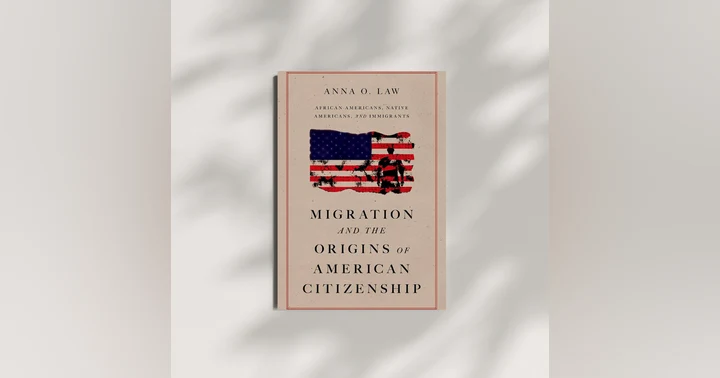
Anna O. Law is a political scientist whose work examines immigration, citizenship, constitutional development, and American political history. Her latest book, Migration and the Origins of American Citizenship: African-Americans, Native Americans, and Immigrants, traces the intertwined histories of migration, slavery, Native American removal, and citizenship from the colonial period through the federalization of immigration law.
Buy the Book:
Anna O. Law, Migration and the Origins of American Citizenship: African-Americans, Native Americans, and Immigrants
Also mentioned:
Samantha Seeley, Race, Removal, and the Right to Remain: Migration and the Making of the United States
Moon-Ho Jung, Coolies and Cane: Race, Labor, and Sugar in the Age of Emancipation
If you enjoyed this episode...
Follow The Clio Dialogues wherever you listen to podcasts, leave a review, and share this episode with someone interested in American history, constitutional law, immigration, or the history behind today's headlines.
***************
Affiliate Disclosure
Some links in The Clio Dialogues show notes are affiliate links. As an Amazon Associate, I earn from qualifying purchases. In other words, if you purchase a book or other eligible item through one of these links, I may earn a small commission at no additional cost to you.
Those commissions help offset the costs of producing The Clio Dialogues, allowing me to continue bringing historical scholarship to a wider audience. Thank you for your support.
Editorial Independence
Books and products featured on this channel are selected because I believe they are relevant to the conversation. Any opinions I express are entirely my own and are never influenced by affiliate relationships. Any opinions expressed by my guests are their own.
SPEAKER_01
Hello and welcome to the Clio Dialogues, the podcast that links history with the present to help us better understand the world we live in today. I am your host, Jennifer Robin Terry. Today I am joined by Anna O'Law, who is the Herbert Kerr's Chair in Constitutional Rights and Professor of Political Science at CUNY Brooklyn College. Her research focuses on U.S. immigration, constitutional law, and legal history.
SPEAKER_00
So it's uh it's not that I was seeking relevance, it was relevance was sort of thrust upon me, which is a very weird thing.
SPEAKER_01
Anna joins me today to discuss her recently published book, Migration and the Origins of American Citizenship, African Americans, Native Americans, and Immigrants, which was published by Oxford University Press. Hello, Anna. I am so glad you're able to join me in the studio today. I'm really glad to be here. Thanks for having me on. So we I want to let listeners know that we are actually recording this less than 24 hours after the Supreme Court decision in Trump v. Barbara, which reaffirmed that children who are born in the United States are actually U.S. citizens. Before we get into the history, why do you think this is such a contested issue today?
SPEAKER_00
It is a contested issue only because the president decided to make immigration and a war on both undocumented and legal immigrants an issue. He ran on that as a campaign issue. And now he's following through. Birthright citizenship itself is part of immigration policy. The entire immigration policy is not just driven by Trump, it's driven by Stephen Miller, who is a nativist, a racist, and a white nationalist. And so this controversy over birthright citizenship is him stirring, both of them stirring the pot to try to erase through executive order a bedrock constitutional protection of immigration and citizenship. But a through line and a continuous part of US immigration and citizenship is the nation has always been uncomfortable with the idea of a multiracial democracy where lots of different kinds of people have equal rights and citizenship. And the access to citizenship should be open to all groups of people. That has been a continuous thing throughout US immigration history. I'm not a big fan of the term nation of immigrants because it just leaves too much out. I know it comes from JFK. It is meant to celebrate the long history of US voluntary migration. But the term completely erases the fact that there were people here. There were Native Americans here. The colonists and the immigrants and voluntary migrants did not go into unoccupied territory. There were original landowners and indigenous people who resided on their ancestral lands. And nation of immigrants also erases enslaved migration. By no means in my book would I call enslaved people brought here against their will immigration, because that term implies consent. But Nation of Immigrants just glosses right over those two things.
SPEAKER_01
Let's focus a little bit then on Native Americans. I mean, you have Native Americans all throughout this book, and typically when people think of a book on migration and U.S. citizenship, they do not think Native Americans. Can you you tell us a little bit more about this connection? I I know there's there's forced migration, right, with the Trail of Tears. Can you flesh that out a little bit for us?
SPEAKER_00
So I was not expecting to talk about Native Americans when I first began writing this book. I wanted to talk about voluntary migration. Given the time period of my study, which is the colonial period to 1888, I anticipated and expected I would have to talk about slavery. But I got to the middle of my book and I realized, oh wow, I really need to learn, at least make an attempt to learn Native history and federal Indian law. And the reason is I was seeing in 19th century immigration decisions about voluntary migrants, references to Native people, the expansion of cotton growth in the southeastern states in the 1830s, you know, when uh the prices of cotton went through the groof internationally. The southeastern slave states eyed Native American land and thought, oh wow, we can expand the growth of cotton. And we can therefore also expand slavery. So I see the history is the southeastern states pressure and goad the federal government into carrying out a mass violent deportation of 80,000 people. So a lot of your listeners will have heard of the Trail of Tears, deportation led by, carried out by, funded by the federal government. So what Native Americans are doing in a book about voluntary migration is I saw very clearly that the ability of one group, Native Americans, to stay on their ancestral lands was relational to the lawmakers and the jurists of the time, to another group. So white settler immigrants and migrants going into that area, occupying that land, owning that land for the purpose of expanding cotton and expanding slavery. So the groups of people who can stay there and who can go somewhere are relational.
SPEAKER_01
So let's talk a little bit then about slavery, because it did expand greatly in the early 19th century because of King Cotton. So what does slavery have to do with migration and the origins of citizenship? As you say, this is not voluntary immigration.
SPEAKER_00
So um most US immigration historians and immigration law professors who study and teach immigration history do not also cover enslaved migration, and for pretty good reasons. I mean, this is completely involuntary migration, this is forced migration. So I'm not arguing that enslaved people are immigration, but from the colonial period through the early Republican 19th century, I see multiple examples of the existence of the institution of slavery affecting the content and trajectory of laws about voluntary migration. So the existence of slavery, for example, uh in South Carolina, this was a state and a colony, and then a state that had parts of the state where its majority enslaved African Americans. South Carolina in the colonial period had these uh laws that said that they were trying to encourage European white male Christian servants to go there.
SPEAKER_01
Their laws specifically said that?
SPEAKER_00
Yes. There were laws, so this is how it worked. There were high taxes on the importation of enslaved Africans, and those taxes were put toward a fee to recruit indentured servants. And so why are there taxes in South Carolina where they are very pro-slavery and very enthusiastic about slavery? Why is the colony passing laws uh trying to discourage and slow down enslaved importation? It's because this is not about some moral squeamishness about, oh, maybe slavery is morally wrong. They are trying to guard against enslaved insurrection by controlling the flow and the volume of enslaved people that are imported. They are also, the planters are trying to control the price of tobacco. So if they overproduce because there are more enslaved people producing the tobacco, then the prices drop. So they're trying to manipulate the control of tobacco. Why is that law in place that you know they're trying to uh heavily tax enslaved migration is because of slavery. It's because of the institution of slavery. And there are laws related to that called racial, racial laws in South Carolina that said, okay, if you're a planter, you have to hire enough white indentured servants to oversee X number of enslaved people. And that again was to guard against enslaved insurrection. That law is there because of the existence of slavery and the fear of enslaved rebellion.
SPEAKER_01
And so this is South Carolina making these laws. This is not the federal government, right? Is is that common in this time that it's a state making these laws?
SPEAKER_00
So these are colonial-era laws. So it's the colony, and the British Metropole avoids those laws because the international slave trade is very lucrative for the British Empire, and they just struck them down and voided them and disallowed them, was the word. And uh the colonies got really upset because from the beginning, the colonies and then the early republic states all the way to 1888, migration controls are local out of practice and tradition. And so the colonies were telling King George III, what are you doing? You don't know the conditions here, you don't know how dangerous it is here, they alleged. We have to be able to control migration streams. Um, and so that ends up as a line item in the Declaration of Independence, that the colonies are extremely upset that the Metropole is disallowing colonial laws about slavery.
SPEAKER_01
So then America declares independence. This is a line then in the declaration, and these colonies become states. Do they continue to make these laws? And this time they stand because you don't have England and a federal government for some reason has not decided to take on control of immigration at this point.
SPEAKER_00
Right. So um local control of migration, international and interstate migration begins in the colonial period through common practice, and that pattern of division of labor continues in the early republic. The states control international and interstate borders, and it's not that the federal government wasn't interested, the states were simply not having it. The slave states, so imagine the uh possibility of a federal deportation power. Uh, this issue came up in 1798 with the Alien Friends Act, where Federalist John Adams uh you know tried to pass this package of laws, the Alien and Sedition Acts. And one of those laws, the Alien Friends Act, gave the president broad discretion to deport aliens or non-citizens who were from countries that the U.S. was not at war with. The slave states did not like that. They had put in the Constitution multiple safeguards that the federal government could not touch slavery. The idea of a federal deportation power meant the scary possibility that the federal government could deport all their enslaved people.
SPEAKER_01
So Adams could have just said, hey, we're deporting people of African descent, and that would have been it if the federal government had retained that power.
SPEAKER_00
Right.
SPEAKER_01
They never had it.
SPEAKER_00
The federal government never had control over international and internal borders, really, until it transitions, immigration controls transition in the late 19th century. They didn't have it, not because they didn't want it and didn't try to have it, it's because the slave states said, no, you cannot have that. The Northeastern states, who were afraid of people who couldn't economically take care of themselves, said, we can't have the federal government controlling our borders. We're gonna get slammed by poor people, disabled people. And, you know, there's no welfare safety net programs at this point. So we're gonna get stuck with these people. And they were collecting huge fees and bonds in revenue, so they didn't want the federal government interfering with that.
SPEAKER_01
Interesting. So a lot of people talk about open borders, and they they think that before the time that the federal government controlled immigration, that there were open borders, but it sounds like you're saying no, that was not the case.
SPEAKER_00
The borders were never open. We can argue about whether colonial governments and early republic governments had the administrative capacity to actually enforce all these laws. Were they able to turn back and to deport? And the states were deporting people. Massachusetts was deporting poor people to Ireland, to other parts of Europe, to Canada, to other states. We could argue about whether the states had the colonies had the manpower to actually carry out and enforce these laws, but that is a very different discussion than one that asserts oh no, anyone could present themselves at a border and automatically be admitted. There were no laws whatsoever, which is not true.
SPEAKER_01
To bring it back to the contemporary, this is summertime. We have a lot of people traveling. I heard like something like 72 million people will travel for summer vacation or to visit people. We kind of take it for granted that we can cross state lines, we can fly across the nation, we can go to other countries. But in this period, this early republic period that you're talking about, people didn't have that right to just go wherever they wanted and stay where they wanted. You talk about the right to remain. Can you tell us a little bit about that and how that differs so much from what we take for granted today?
SPEAKER_00
The right to remain is a term that I borrow from historian Samantha Seeley's excellent book on the topic, and she really opened my eyes to that term. And my friend who was helping me, you know, proofread it, he said, is so clunky. What is that? I mean, can't you just put it under migration and people understand what you mean? I mean, why is it like the right of mobility and the right to remain is so goofy and clunky? I said, it's because the term sounds foreign and alien to our ears in 2026 because we don't know of such a thing. But the ability to go somewhere and then the ability to set roots and stay there was not universal. There were two different sets of laws. Both of those sets of laws were controlled by the colonies and then the states until immigration becomes federalized. So we don't think of internal borders erected by states, legal requirements to move between states and to stay there, because most people don't know that migration history, which doesn't include African Americans. And free back people could not go wherever they wanted, and to say, Oh, I will stay here now. There were legal restrictions on whether they could stay, whether they could enter a state, and definitely on whether they could remain there.
SPEAKER_01
You know, something I was struck by. Oregon entered the union with laws on their books that prohibited free black migration.
SPEAKER_00
Oregon was the first to enter the union as a state with that on the books. Slave states already had exile laws that said that if you were manumitted and you became free, you were given a deadline to leave the state, otherwise, you would risk re-enslavement. So Oregon's law is different. They are entering the union with that provision that bans free black people. And if listeners are wondering, okay, why did states have these laws? Well, it's racism and it's a rejection of a multiracial democracy. Even abolitionists didn't believe free black people could be compatible and stay in the United States and be political members and economically sustain themselves. So there's a lot of racism, and that's why Oregon successfully enters the union with a law banning free black migration into the state. And we don't really think about internal migration restrictions. And the reason why US immigration scholars don't cover it is because it's about African Americans. That's a separate history siloed in a different subfield.
SPEAKER_01
Oh, that's interesting. It's that siloing, and you actually bring it, you bring it together. Your book has so much to say about westward expansion and regionalism. I mean, someone who is interested in the West could certainly read this book and gain so much. Someone who's interested in in the South or the North-South relations could get so much from this book. I mean, it's just you you show that siloing these fields really doesn't work if you really want to understand US history.
SPEAKER_00
I mean, and not just the subfields, right? So in US history, the silos are by subfields, African American history, Native American history, US immigration history, legal history, political history. But then it's further siloed by time period, right? You have early Republic historians, you have colonial historians, and then you have 20th century historians. It's great for administrative purposes, but it sometimes misses stuff.
SPEAKER_01
Can you explain the role of the 14th Amendment?
SPEAKER_00
So the Civil War and the 14th Amendments, and really all the Reconstruction amendments, mark the beginning of the end of local control over international and interstate migration. And the reason is one of the biggest effects, probably the biggest effect of the existence of slavery on voluntary migration is that slavery delays the transition of immigration controls to the federal level. So when slavery is over with and done after a civil war and after the 13th Amendment uh invalidates uh slavery, slavery is then politically off the table. And that meant that slave states no longer fought so hard against the federal government to maintain control of international and interstate borders. And the Supreme Court started striking down laws, local migration laws like the New York ones that heavily taxed poor sickly and disabled people, and started striking those down. So the 14th Amendment and the Reconstruction amendments are a necessary but insufficient condition for the federalization of immigration. It begins the process, it kicks off, but there are other things like the arrival. Of Chinese immigrants in large numbers in California about 1850, that really pushes immigration to the federal level.
SPEAKER_01
And I know that when Chinese immigrated in large numbers, there was a backlash in California because of the competition in labor, competition for gold. You talk up in the book about the Chinese actually kind of lose when slavery is abolished. Can you explain that?
SPEAKER_00
So, I mean, how can how can anyone lose if if slavery is abolished? This sounds like, wait, what? Are you telling me the 13th Amendment abolishing slavery was a bad thing? It was a bad thing for Chinese immigration. So Moon-Ho Jung has an excellent book called Coolies and Cain that I drew from. And he said, you know, when slavery was abolished by the Civil War politically and by the Reconstruction Amendments, it made it easier to paint the newest arriving group of immigrants, which were the Chinese, as these are servile people who came here and they are just like slaves. Why would we, as a country, fight a bloody civil war and then only to have enslaved Africans replaced by unfree labor of the Chinese? But it's not an accurate argument because the Chinese are not enslaved people. Many of them sign contracts where their employer would garnish part of their wages or withhold part of their wages to pay for their passage from China. But they willingly sign those contracts. But the popular press and uh the labor unions, the California local officials whip up this anti-Chinese racist argument that uh which made it easier to paint the ending of slavery, made it easier to paint the Chinese as yet another group of servile people, and which led to the states, California tried to ban Chinese immigration through multiple methods, all of those laws are struck down because now there's the 14th Amendment and the Reconstruction amendments. And so when California um tries to pass these laws and they are avoided by the California Supreme Court, that anti-Chinese politics spills into national politics, and members of Congress and the Western delegations pressure the federal government, saying, hey, listen, if you're not gonna let the state ban Chinese immigration, you do it. You take over.
SPEAKER_01
And so the federal government does, but it's a Chinese man who ends up challenging and uh winning a victory for birthright citizenship fairly early on.
SPEAKER_00
So the uh the Chinese immigrants are reviled in California in the late 19th century, and also in Oregon and Washington, where they were also working. And it's racial animus, it's perceived economic competition, it's labor unions and demagogues whipping off anti-Chinese sentiment. And so when the Reconstruction Amendments are passed, they definitely had in mind that reviled group. And it comes up in the discussion of the 15th Amendment, of the 14th Amendment, the framers very explicitly talk about, oh my God, if we have birthright citizenship, does it mean those horrible Chinese people who are currently banned from naturalizing, but wouldn't their children become citizens? And yes, they would, and it was understood. So, in that backdrop, when the federal government finally passes one of the first federal immigration laws, which bans an entire race of people by race and class, the Chinese Exclusion Act of 1882, uh, the federal government goes further and passes more laws tightening Chinese exclusion because too many Chinese were still getting in through the federal courts. So a man named Wong Kim Ark, he is born in to Chinese parents in California, and he is born after the 14th Amendment is passed. And so his parents are legally authorized to be in the United States, but are banned by U.S. immigration laws from naturalizing because they are racially ineligible for naturalization. Only free white persons could naturalize and they are not white. So Wong Ki Mark is born in the U.S., he goes overseas to China to visit his family, he comes back, and uh immigration officials, by then, this is federal immigration officials, tell him you're not authorized to come in. You are the child of uh people who are not citizens, which is all technically true, but that's not what the 14th Amendment says. The language and text of the 14th Amendment says all persons born in the United States, with three narrow exceptions, which he did not fall under. So Wonkey Mark brings a lawsuit, hires the best legal counsel, gets to the Supreme Court, and this is the same court I want to remind everyone that decided Fletsi versus Ferguson. This is not a particularly racially enlightened court, and even they said, well, you know what? The um legislative intent and the words of the 14th Amendment actually mean what it means. Um this Chinese American man is in fact a U.S. citizen by birth because he was born in the United States, and that case from US V Won Kim Art is a landmark constitutional case. It has been the controlling precedent on birthright citizenship for 128 years. It is that long and deep precedent that Trump tried to overturn with a mere executive order.
SPEAKER_01
So when you wrote this book or when you sent it off to your publisher, did you have any idea how relevant it would be to contemporary politics?
SPEAKER_00
No idea. I had no control over uh when the book is published. It turns out it was published two weeks before the oral arguments in Trump v. Barbara, the birthright citizenship case. So uh it's not that I was seeking relevance, it was relevance was sort of thrust upon me, which is a very weird thing.
SPEAKER_01
Yeah, it must be. And you must be very busy uh lately. I actually do follow you on Blue Sky, and I see that you are reading Amica's briefs. You are reading the court decisions. Uh is there anything they miss in the history here?
SPEAKER_00
Before I got on to record this podcast with you, I'm in the middle of writing a gigantic blog post going through the decision and basically historically fact-checking them. Um, it's not so much what they missed as what the descent and the US government, the history they willfully ignore. Willfully ignore. This is a court that says that in interpreting the Constitution, they're guided by textualism, which is the, you know, to read the words and the meaning of the words, and originalism, which is the interpretive uh philosophy that says we have to understand if we don't know what a part of the constitution means, we need to understand what the framers and the ratifying generation meant. There is willful disregard by the government and the descent of reams of historical research by historians and by Megal scholars about what the intent of the 14th Amendment was and about the state of citizenship and migration. So I um it's is with great dismay and alarm that I heard the oral arguments and I'm screaming in my heart because I can't really I don't want to alarm the neighbors. Um so yeah.
SPEAKER_01
Well, I'm really glad that your book is out right now, and I encourage people to read it. It's just so valuable. Knowledge is power, and we need this knowledge right now. Thank you.
SPEAKER_00
I don't think that maybe even federal judges will read my book, but I wrote it very deliberately in accessible language so that smart lay persons can understand and follow along. Instead of writing some dry theoretical treatise of constitutional history, which people's eyes would glaze over, I really tried not to use jargon. And so my audience of persuasion is the general public. But I hope enough people will read my book that they understand when the Supreme Court is screwing up the history.