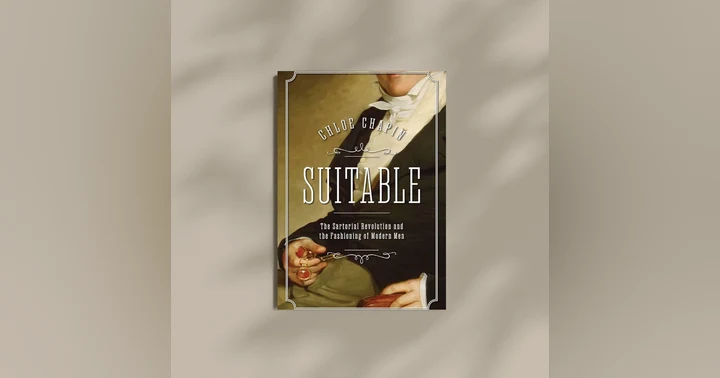
Fashionable Fathers: How the Founders Revolutionized Men’s Fashion | Chloe Chapin

𝐏𝐥𝐚𝐢𝐧 𝐢𝐬𝐧'𝐭 𝐧𝐞𝐮𝐭𝐫𝐚𝐥. The modern business suit may seem timeless and practical, but its history reveals how clothing came to shape our ideas about power, respectability, and political authority. Drawing on her unique perspective as both a designer and historian, she explains how the Founding Fathers helped revolutionize men's fashion and how the plain dark suit evolved into the global uniform of presidents, executives, and diplomats 𝐈𝐧 𝐓𝐡𝐢𝐬 𝐄𝐩𝐢𝐬𝐨𝐝𝐞 Why does the suit signal authority? When Ukrainian President Volodymyr Zelensky appeared before world leaders without wearing one, his clothing becam...


𝐏𝐥𝐚𝐢𝐧 𝐢𝐬𝐧'𝐭 𝐧𝐞𝐮𝐭𝐫𝐚𝐥. The modern business suit may seem timeless and practical, but its history reveals how clothing came to shape our ideas about power, respectability, and political authority. Historian Chloe Chapin uncovers the surprising history behind the business suit and why it still shapes our ideas about leadership today.
𝐈𝐧 𝐓𝐡𝐢𝐬 𝐄𝐩𝐢𝐬𝐨𝐝𝐞
Why does the suit signal authority?
When Ukrainian President Volodymyr Zelensky appeared before world leaders without wearing one, his clothing became a story of its own. But why should a suit communicate respectability, professionalism, or even political legitimacy in the first place?
In this episode of The Clio Dialogues, historian and former Broadway costume designer Dr. Chloe Chapin traces the surprising history of the plain dark suit from the American Revolution through the Civil War. Drawing on her unique perspective as both a designer and historian, she explains how a style embraced by the Founding Fathers evolved into the global uniform of presidents, executives, and diplomats.
Along the way, we discuss George Washington's carefully chosen inaugural wardrobe, why John Trumbull’s famous painting of the Declaration of Independence gets the clothing wrong, how suits came to symbolize democracy and modern masculinity, and why "plain" is anything but neutral.
Whether you've ever worn a suit or simply wondered why we associate one particular style of dress with authority, this conversation will change the way you see one of the most familiar garments in modern life.
𝐖𝐞 𝐃𝐢𝐬𝐜𝐮𝐬𝐬:
- Why Volodymyr Zelensky's clothing became an international political issue
- How the Founding Fathers transformed men's fashion
- Why the business suit became a symbol of respectability and authority
- George Washington's inaugural wardrobe and what it represented
- The surprising inaccuracies in John Trumbull's famous painting of the Declaration of Independence
- The relationship between clothing, democracy, and masculinity
- How nineteenth-century Americans used clothing to judge character
- Why Emerson, Thoreau, and Whitman struggled with conformity
- What suits reveal about identity, power, and political authority today
𝐅𝐞𝐚𝐭𝐮𝐫𝐞𝐝𝐆𝐮𝐞𝐬𝐭
Dr. Chloe Chapin is a historian, artist, and former Broadway costume designer. She earned her PhD from Harvard University. She is the author of Suitable: The Sartorial Revolution and the Fashioning of Modern Men (Oxford University Press).
***************
𝐁𝐮𝐲 𝐭𝐡𝐞 𝐁𝐨𝐨𝐤:
Chloe Chapin, Suitable: The Sartorial Revolution and the Fashioning of Modern Men Bookshop.org or Amazon
Also mentioned:
Karen Halttunen, Confidence Men and Painted Women: A Study of Middle-Class Culture in America, 1830-1870 Bookshop.org or Amazon
***************
𝐈𝐟 𝐲𝐨𝐮 𝐞𝐧𝐣𝐨𝐲𝐞𝐝 𝐭𝐡𝐢𝐬 𝐞𝐩𝐢𝐬𝐨𝐝𝐞...
Follow The Clio Dialogues wherever you listen to podcasts, leave a review, and share this episode with someone interested in American history, gender, fashion, or the history behind today's headlines.
**𝐇𝐢𝐬𝐭𝐨𝐫𝐲 𝐫𝐮𝐧𝐬 𝐨𝐧 𝐜𝐮𝐫𝐢𝐨𝐬𝐢𝐭𝐲... 𝐚𝐧𝐝 𝐨𝐜𝐜𝐚𝐬𝐢𝐨𝐧𝐚𝐥𝐥𝐲 𝐜𝐚𝐟𝐟𝐞𝐢𝐧𝐞.**
The Clio Dialogues is independently produced. If you'd like to help support future episodes, consider buying me a coffee. Every cup helps keep new conversations coming.
***************
𝐀𝐟𝐟𝐢𝐥𝐢𝐚𝐭𝐞 𝐃𝐢𝐬𝐜𝐥𝐨𝐬𝐮𝐫𝐞
Some links in The Clio Dialogues show notes are affiliate links. As a Bookshop.org Affilate and Amazon Associate, I earn from qualifying purchases. In other words, if you purchase a book or other eligible item through one of these links, I may earn a small commission at no additional cost to you. If you order through my account on Bookshop.org, not only will you get fascinating books, but you'll also be supporting the author, the podcast, and local independent bookstores. A win for all!
Those commissions help offset the costs of producing The Clio Dialogues, allowing me to continue bringing historical scholarship to a wider audience. Thank you for your support.
𝐄𝐝𝐢𝐭𝐨𝐫𝐢𝐚𝐥 𝐈𝐧𝐝𝐞𝐩𝐞𝐧𝐝𝐞𝐧𝐜𝐞
Books and products featured on this channel are selected because I believe they are relevant to the conversation. Any opinions I express are entirely my own and are never influenced by affiliate relationships. Any opinions expressed by my guests are entirely their own.
SPEAKER_00
Hello and welcome to the Cleo Dialogues, the podcast that links history with the present to help us better understand the world we live in today. I am your host, Jennifer Robin Terry. How did the plain dark suit become a symbol of respectability, authority, and power?
SPEAKER_01
The Founding Fathers really used it as a symbol of a new kind of democracy, modernity, equality. And the suit, sort of supporting that, is an idea that still holds.
SPEAKER_00
My guest today is Dr. Chloe Chapin, a former Broadway costume designer whose midlife pivot led her to Harvard, where she earned a PhD in history. Her new book, Suitable, The Sartorial Revolution and the Fashioning of Modern Men, explores how the plain dark suit became the global uniform of authority and respectability, and why its influence extends far beyond fashion. So hi, Chloe. It's so nice to meet you, and it's so great that you could join me here at the Cleo Dialogues.
SPEAKER_01
Thanks so much for having me, Jennifer.
SPEAKER_00
I wanted to start with something that you said in the acknowledgments, and that is that this book exists because of a conversation you had with Daniel Radcliffe. So do we really have Harry Potter to thank for this book?
SPEAKER_01
It's funny how many people find that hiding in the acknowledgments. It's true though. A lot of people say, as a historian, how did you discover suits? And I am always like, oh no, I was suits. And then I became a historian to write a book about them. So yeah, I um was designing the clothes for a Broadway play that he was in, Equus, and he wore just casual clothes in the play, like jeans and a polo shirt or something. But he wore this really beautiful blue tuxedo to the opening night party. And so we were chatting about it, and he told me the story about how, you know, he's English. So English royals were wearing midnight blue tuxedos, uh, in part because they read better on film. And Edward VIII was the first really widely photographed royal in the 1920s, and it became the sort of insider's club of wearing midnight blue tuxedos. And that just really like, you know, I I always loved history. I think probably my brain was not one that was really immediately suited to the kind of study that would have made me a historian right away. I'm not very good at sitting still and listening. Um, but I think a lot of people who do theater are sort of natural historians. It's like a way of putting theater up on its feet. I started off doing Shakespeare plays, and you know, I just love the old-fashioned language and the gravitas and the drama and the capes and the cod pieces and the, you know, corsets. It just was so glamorous and magical. And I still sort of feel like that about history. So I just was really taken by that story. And I already was thinking about suits because I was annoyed as a costume designer that there were so few books about it. It was hard to do research on menswear. So then a couple years later, I was doing research for this opera where I was trying to figure out if that uniform of this is before tuxedos, of white tie, you know, was really sort of uh established as a uniform in the middle of the 19th century. And then I rolled backward earlier in time to the 18th century, and I was like, wait a minute, nobody was wearing black and white then. So obviously something interesting happened in there. And and so initially when this project was a dissertation, I was really focused on the um evening dress, and it sort of got bigger and met the founding fathers and became more about the American Revolution. But yeah, interesting that a book about the American Revolution was inspired by an English movie star.
SPEAKER_00
Yes, I love that. I think that's so great. And I think that costume designers everywhere are going to bless you for writing this book. I mean, there's there's so much just really great information in there.
SPEAKER_01
Although I will say, you know, one of the things that I wanted as a costume designer was a more sort of traditional book that you would find like on fashion history, where it's like first they were this and then they were this, and then this year they started wearing this, and then this year they started wearing this, and then this went from here to here. Like, that's the book that's actually helpful for costume designers with lots of pictures. So sorry, costume designers, I haven't written that book yet. But I hope that this, you know, one of my hopes for the book is that this is the kind of project that can build a bridge between people who are really interested in fashion but haven't ever really thought much about history or maybe politics, and people who are really interested in history, but just have never really paid that much attention to fashion or American fashion. So I sort of hope that it it maybe can connect the two audiences.
SPEAKER_00
I think it will. It's it's just it's really great in what it does there. I wanted to ask you about uh Ukrainian president Vladimir Zelensky and all the flack that he has taken over the last few years about not wearing a suit, the big Trump blow-up.
SPEAKER_01
Well, I guess so two things. The first is I think it's really important in that story that he was a professional actor before he was a politician. Uh and I think that really informed his choice. Like he's a savvy guy, he just knows what he's doing. And one of the things that clothing does, like broader than suits, is it is a language and it tells people things without you having to open your mouth. And so everywhere Zelensky has gone, he has said to the whole room before he says a word, my country is at war. And that's a really powerful message. So that's sort of the first thing that I think from a fashion historian's perspective on it. And then the other piece of it in terms of the critique is um I d haven't done an exhaustive survey of the critique, but I'm pretty sure that most of it has come from the political right. And that is often the case. It's certainly true for Obama's tan suit debacle. Um and it it feels very clear that when people on the political right are critiquing someone's clothing, it's never really about the clothing. It's just used as an excuse for a political debate. And so they were already gonna make that critique anyway. And the clothing just allowed, it gave them an opportunity to say something that they already thought.
SPEAKER_00
And that critique being that it's disrespectful to not wear a theme.
SPEAKER_01
Yeah, disrespectful, you know, a welfare queen, can't even afford a suit. You know, there's the critiques are kind of ludicrous, but yeah, the idea of being sort of a freeloader and then showing respect, I think, through suit. And that's, you know, that theme was important to me in my book because what I was doing is really looking at the origin story of the suit, or at least the modern suit. And what I found was that the founding fathers really used it as a symbol of a new kind of democracy, modernity, equality. And so this idea of respect, civility, civil discourse, maybe being necessary for this new world and this suit sort of supporting that is an idea that still holds. And that's, you know, just like a really good evidence of it. And it's not just American anymore, it's a global phenomenon that people attach so much significance to this outfit.
SPEAKER_00
So uh what were men wearing before the suit? I mean, we we just we're so used to it now, and we look at the founders and we see these, you know, very plain, dark outfits. So I'm thinking, what what were they wearing before that?
SPEAKER_01
So I think that there's a fairly standard history of menswear that tells this story about sort of decorative to plain. Um, and that story has mostly been told from the European perspective. And what I wanted to do in this book was to tell that story from the American perspective. And I really didn't know what I was gonna find. It's not like I it was totally obvious to me. I hear a lot of historians talking about now, you know, in the days leading up to the anniversary of the independence, reminding everyone that like those people all thought they were British until like the last minute. There's lots of evidence that said that Americans were better dressed than people in London, that as soon as they could get there on the boat, they were wearing the latest fashions. So in terms of menswear, they were still wearing what we would call a suit. Um, but in the 18th century, that collection of garments, the word suit originally had the meaning of like a set, so a set of things. Um, but they didn't all have to be matching. You know, we think about suits today as all having the same fabrics, but that went in and out of fashion. And in the 18th century, it was more fashionable for the three different pieces, coat, waistcoat, and breeches, to all be different fabrics, or maybe for the coat and the breeches to be the same and then the waistcoat to be different. But the key is really just there was a such a wide variety in the same way that you would think about women's wear today, a wide variety of colors, including very bright colors, pink, pastel, white, gold, gray, you know, the whole dark red. You could just wear any color that was not seen as unmasculine, a wide range of fabrics, including velvet, silk, and then those things could be decorated with embroidery and sequins, and and this is maybe more for court dress, and there was no court in America, in colonial America. So I think it was it was brighter, it was more varied, it was more sumptuous in terms of the types of fabrics. Um, but I think the key is really that it was just much more varied. Uh, and that was one of the things that shifted was that it became darker, plainer, and more uniform.
SPEAKER_00
Did that change with the revolution, the American Revolution, or did did it kind of start before, or does it come along later?
SPEAKER_01
It's a little hard to tell because there's so little visual media of American fashion right around the years of the revolution. You know, the quality of the painters is not quite the same as the quality of painters in England, with a couple of exceptions, like John Singleton Copley and later Gilbert Stewart. But a lot of painters like John Trumbull fought during the revolution. So he wasn't painting portraits of people right in that moment. So there are a number of paintings of the revolution that were painted 40 years after the event, like the Declaration of Independence painting that's at the U.S. Capitol building. And so he kind of made up those clothes a little bit. They're not really accurate to 1776. They're sort of a mashup of somewhere between 1776 and 1800.
SPEAKER_00
That was something I wasn't aware of. And you have a picture of this painting of the signers of the Declaration of Independence. It's so well known. It's the way we all sort of think about that moment. And yet what you write about it is interesting for a couple of reasons because number one, it's not a photograph. We don't have these men all kind of standing there proudly. This is an artist's conception of what it might have been. And I knew that, but I never thought about the clothing being inaccurate.
SPEAKER_01
Well, if it makes you feel any better, I didn't either. I mean, I looked at this painting for 10 years while I was writing this book, and it never really occurred to me it was kind of a late epiphany, I guess, that I had, because, you know, menswear in this period is just not very well known. And I had um been focused a little bit more on the first half of the 19th century, and so I hadn't really been doing my due diligence and looking at all these little micro fashions that are happening in the last 25 years of the 18th century. And I just found it was so striking to me that that painting is it's just like a shorthand for the American Revolution or for the Founding Fathers. It's used so often to reference them. And in all of the, you know, um literature on it from art history mostly, it is always talked about as being made up in terms of the room, right? Like there's a sketch that Jefferson made of his memory of the room. And so people have shown how Trumbull kind of exaggerated the room a little bit. And we know that those people weren't all there. In fact, he had to decide who was allowed to be included. Like, should he paint the people who weren't there? Should he paint the people who didn't sign it? You know, that was a big debate. But the literature also says that he faithfully went and tracked down every man who signed the Declaration of Independence who was still alive by the time he had gotten around to doing this, which was 15 years after the event. And so it's talked about as though the setting is made up, but the likenesses are accurate. But they're talking about facial likenesses, not about the clothes. It's so muted, it doesn't really give you the sense of that deep, vibrant color and pattern and decoration. And, you know, the buckles would have been more sparkly and the buttons would have been more decorative. And you can tell that from other paintings, even of those same men that were painted around the time. But also the other real giveaway are the coat collars, because in 1776, very few coats had collars. They just have these sort of bands. But those big stand-up and fold-down collars that we see in so many portraits of the founding fathers, including George Washington, really didn't become popular until around 1788. And so you'll see, even in those portraits of George Washington, the military portraits like commemorating the battles of Princeton and Trenton, the ones that Charles Wilson Peel painted in 1776 have a really flat fold-down collar. And then the ones that Trumble painted in the 1790s have this like giant collar. And those are often the ones that are used to showcase him because they're very grand and they sort of shout revolutionary. But what's interesting is that that style of revolutionary is actually the French revolution, not really the American Revolution. So I just thought it was really interesting. It was an opportunity for me to really put on my costume designer hat and think about like, why did Trumbull do that? Um, don't blame the costume designer, you know. Um, there's lots of reasons for making things a little off period.
SPEAKER_00
I love that you have those two paintings of George Washington side by side in the book so we can really see the difference. It is a it's a big difference. And uh on that note, you have a lot of really great photos in this book. I mean, just almost everything that you're explaining. I'm like, hmm, I wonder what that would look like. Oh, turn the page. There's a picture of it. That's great, you know.
SPEAKER_01
Well, I have to say it was really helpful that it was an American story, and it's, you know, really wonderful that the archives at the Met, at the National Portrait Gallery, in particular, a lot of the images come from those collections that have open access policies. I had to cut so many images. There were like three times more in the dissertation version. I'm a very I like to tell stories with pictures, you know, that's what designers do.
SPEAKER_00
So I want to talk about the chapter that seems to focus the most on the early 19th century is chapter four, Suits in the Streets. Um as I was reading it, I was like, I feel like I've read shades of this before. I know Karen Haltonen talks about, you know, in uh confidence men and painted women that that was a real inspiration for that chapter. Oh, yeah. I mean, it there's there's all this crazy anxiety, you know. Like we think about today, people talk about anxiety and they talk about how difficult life is and all the stresses. And reading your chapter, I'm really getting this sense that early 19th century Americans were really stressed out people, especially the up-and-coming, the middle class. Can you talk a little bit about how that is influencing menswear and why men choose to wear what they wear and how people are perceiving them?
SPEAKER_01
Clothing is not just uh an aesthetic, it's not just a thing, it's not just personal, but it's really interpersonal. Clothing always happens in community. Um, and maybe more importantly, fashion always happens in community because there's there's always this sense of uh anxiety about getting it wrong. Like that's part of what fashion is, the trends you have to like read the room to be, especially for men in a way. Like I think women's fashion has been well critiqued for, you know, the oppression that women suffer under it. And that that's not wrong. It's not that they don't suffer anxiety over their clothes. It just works differently. And I think it's been a little hard to see because of the difference. And this idea of having to play by the rules, I think is exaggerated when there are such clear rules. And the suit is really a rule, you know, it's so rigid, um, both in terms of how it feels in certain periods, but also just like the parameters of it are so narrow. And, you know, yes, if you look at a fashion plate from any decade in the 19th century, you will see difference. I am not saying every suit looked the same, um, but the difference is very narrow, right? And the fact that that we see it as being like so different just shows like how brainwashed we have been to see difference in this like tiny narrow color palette and you know, narrow window of how much you can change the silhouette. Um, but back to your question about anxiety, uh, I don't know about you reading it, but when I was writing it, it sort of was, I don't know, it was sort of I felt a little bit of sense of relief or connection that like, oh, it's not just us today, you know, suffering in this digital landscape and the anxiety of social media and all those things. Like every generation has had its source of anxiety. The thing that was good about America was that you could get ahead, you could change your station, you could raise yourself in society just by working really hard. Um, but then it was like just constantly being on the social escalator, this idea that because you could meant that you constantly should be.
SPEAKER_00
There's so many people moving to cities for the first time. There's like all this stress about like parents and their young sons and their daughters are going to the city and they're just afraid they're gonna be taken advantage of or they're gonna be led astray. And and yet you're saying like the suit it lends this sense of credibility or you know, trustworthiness, and yet you don't really know. It's almost like a facade.
SPEAKER_01
Yeah, the more people could purchase suits, the more they could purchase respectability. And then how would you know who was actually respectable? So it it's sort of like clothes started to be seen as a costume or a mask that would you know trick people into thinking that you were truly a respectable person, really that you were immoral or whatever the problem was, a freeloader. Um, and I really found that idea delightful. I sort of think about it as I think in the book I call it the authenticity gap, this gap between the perceived real self and the facade on top. And I, you know, I think there's a lot of contemporary examples that you could relate it to today. Um, just like as an example, there would be a certain group of people who would see someone wearing a dress and say that looks like a woman because they're wearing a dress. And then another group of people might say, Um, that body to me looks like a man, and a man can't wear a dress. So there's a gap between this perceived thing, even if that body chooses to wear that garment in an expression of selfhood.
SPEAKER_00
And I think that's really the common theme throughout that chapter is how you're being perceived in the world. And the suit became shorthand for respectability. And so if you're a politician or a businessman, that the suit itself demands respect, which I think kind of goes back to this Zelensky issue, and not just Zelensky, but apparently President Trump likes for his whole cabinet to dress very similarly. I mean, he has a very definite idea of respectability, and it comes down to that plain dark suit.
SPEAKER_01
Um and the that perception, I think, also goes hand in hand with the fear of being perceived in certain ways, which then adds to the anxiety. A couple of the other characters that ended up in that chapter, to my delight, were Emerson and Thoreau and Whitman, you know. These other kinds of canonical white men in our history who were really protesting, you know, the what they perceive to be the strictures of modern city life and how oppressive it was, and saying, like, everybody, it's it's so reminds me of social media. It's like everybody looks happy, but they're not happy. Nobody's happy, they're just all acting. It's like basically what Whitman's trying to convince everyone of. So there's so much, it feels so relevant to today. And yet, you know, with maybe the exception of Whitman's portrait and his Leaves of Grass, which got so much attention for being radically casual. Um, but they're still men. And so what are their options? You know, Whitman or uh Thoreau and um uh Emerson in particular, he was photographed many times in his life, and he's always very well dressed in a suit that is, you know, very of the moment. So he's talking about individuality, and then he goes to his tailor and orders the same suit that everyone else is wearing. You know, there's a real, I don't want to call it hypocrisy, because what were his options? Um and I think, you know, you you say in the book it's helpful to have those pictures of everyone wearing the, you know, suits looking the same. And that was something that was really a challenge was what is the evidence that everyone looked the same? It's really hard to find the data for that. And so it was it was interesting trying to figure out, and it really came from really had to be data almost. So I I created these kind of databases to just show, like, look, men wear lots of color. You can see it in these pictures. Or there's another one that's like the first hundred years of the US presidents, and they're all in black suits. Like, yes, you can make arguments that suits changed and that men did wear color, but look, all the presidents are wearing black suits. Like, there is meaning there. And there's something about the suit that is so hard to see. The the design of it is it's almost perfectly designed to be invisible between its blackness, its plainness, the fact that it doesn't change very much. And I think that's, you know, one of the goals of the book is is to see, first of all, just to be able to see suits as not just natural and neutral in a condition of men, but as intentional. And also that plainness is itself is not neutral, that it is in fact has to be designed. And that's really, you know, my designer coming in is saying you still have to pick something to make it out of. So, you know, the difference between a bright thing and a dark thing, like there could be a monetary difference, but there could not be, and you're still choosing to make it a dark thing. So that's that's still a choice. One thing I have started thinking about that I didn't say in the book is, you know, the plain brown wool suit of George Washington that he wore for his inauguration. Americans are always calling it the plain brown suit, as though brown is inherently plain, which is not true. Brown, uh brown was very fashionable at the time, but Washington didn't ask for a brown suit. What he wanted was the highest quality woolens that could be produced in America. And so his buddy Henry Knox tried to find some for him through this particular new woolen mill in Hartford, Connecticut. And he ordered a bunch of different colors. Knox did, and and he received them and then sent them onto Washington. He sent two of them onto Washington because he said the rest of them, actually, I think it was only one, but the bottle green was good enough. It was still, he thought that Washington would still be disappointed because it was like second quality English goods. He didn't even bother sending the rest of them on because they weren't good enough. Wow. So it was possible that his coat could have been green. That was like second option was green, which would have told a different story of America.
SPEAKER_00
Plain green.
SPEAKER_01
Exactly, right? It doesn't have the same ring to it, does it? And even the next day, there were reports in the newspaper that people were complaining that he had worn a suit of imported fabric because people thought it was too nice to have been made in America. But then one thing I think is so interesting about that, all those pictures of the presidents altogether is Washington is the first president. He's also really the first American that regularly we see wearing black. So the birth of the black suit and the birth of US presidents happens at the same time, which makes it really hard to see. Because if we had just had like one or two other presidents before Washington, they would not have been wearing black suits. 100% they would not have been wearing black suits. So we could have seen the transition more in, you know, American portrait history. And the fact that that happens together is like, well, that we should really pay attention to that. But I was, I've just been thinking there is a particular reason why Washington started wearing black because his mother died right after the inauguration. And it's unclear why he kept wearing it, although he clearly saw as a symbol of his status. But if that hadn't happened, you know, he had those two brown wool suits that Mount Vernon collection still has. What if everybody had adopted brown suits instead of black suits? Like the whole world would look really different. And that's one of those things that a, you know, a designer can do is come in with that kind of imagination and speculate, have this sort of speculative alternative future. What if everybody around the world was wearing brown instead of black? That could have happened.
SPEAKER_00
So the black suit was not inevitable that it would become this ubiquitous uniform. So did like John Adams got elected and he's just like, what did Washington wear? I guess that's what I'll wear.
SPEAKER_01
I think it's harder to tell that story for the first couple presidents. There's not that many portraits of them. Not all of them. They're wearing black suits. So I don't necessarily think right away that other men thought, oh, I better wear black because now I'm a president. But clearly Gilbert Stewart was onto something. Um, and you know, he really just like milked those paintings of George Washington for the whole rest of his career. I don't remember how many there are, but there are a lot. He just was like painting, painting, painting, Washington, Washington. Does anyone else want a painting of Washington? I'll give you a painting of Washington, and you a painting of Washington. And he sort of did the same a little bit with some of the, you know, future presidents. And so it's unclear to me whether the origins of the relationship between black being connected with presidents or being fashionable was a trend in fashion or a trend in paintings. Because it could be that men were just wearing black when they went to get their portrait painted. And you can really see there's a big difference in full-sized portraits and then miniature portraits. So if you're ever thinking, well, men in America weren't that fashionable, look at the miniatures. That's where they get super fashionable, where they're wearing like extra high collars and they've got these like puffed sleeve caps and they've got their like, you know, trendy haircuts, and they look very different than their more life-size portraits. And, you know, it's unclear exactly why that happened, but you know, you could speculate that they knew that those larger ones were going to hang on the wall, and there was something timeless is a word that I use with caution, but something timeless about the plainness of the black suit. And also, I think really maybe just logistically, materially, that the black suits really like blend into the background, and so the focus is really more on the face in those portraits.
SPEAKER_00
If I were still teaching, I would assign this book uh for like an early American survey course, a class on the early republic up to the Civil War. I mean, this was a great book. After reading it, I am seeing suits everywhere. Yeah, yeah. The plain dark suit. I was watching the World Cup last night, and the camera shoots to the uh the FIFA box. And I'm like, every one of those men are wearing a plain dark suit.
SPEAKER_01
One of my goals in this book, but also one of the challenges, was to tread this line between really talking about that. This is a book about white men and the power that the suit has imbued in them. The way that when the founding fathers adopted this simple dress as a symbol specifically of democracy and equality, I really think they harnessed those ideas, those political, philosophical ideas to what other scholars have called the ethnic dress of white men. And that has had lasting consequences, I think, that we haven't even really been able to see in terms of who gets considered to have political selfhood. In the book, I include a couple of photographs of the G20 summit, which I always think is just sort of a good data point in terms of the power that suits clearly have globally, because everyone is wearing them, even people who come from climates where three layers of wool is the last thing that you want to be wearing. Um, and this idea that democracy is only possible, or that decency and respectability is only possible when everyone is dressing alike, that really seems to prioritize a particular kind of person, white men. And that, you know, I think democracy could be powerful in a different way if we thought about it in terms of difference, and that that would be the thing that democracy would unite people across and not just looking for everyone to be the same. And I don't want to, you know, blame the founding fathers. They didn't do this wrong intentionally. It's not like they were like, ooh, if we costume them in this outfit, then those ladies will never get to be president. You know, they were doing something revolutionary and they were sort of, you know, pushing the ball forward as far as they could see it. So I want to look at that power and see how suits have sort of drawn this map around white men and in terms of this symbol of democratic power or social authority that other people are perceived as not having access to. You know, women can wear suits, or non-binary people can wear suits, but it's often seen as a kind of borrowed power, you know, like the boyfriend jacket that masculine tailoring is often seen as authority borrowed from men. But at the same time, I also wanted to, number one, make this book appealing to white men. I didn't want to alienate that kind of reader. Um, and I also wanted to show how the suit was also detrimental to white masculinity, too, but in a totally different way. The suit also kind of trapped white men in this cage of conformity, which means that they a lot of them haven't felt the ability to express sort of like a natural human instinct and this desire for ostentation or color or fabulousness or even just the ability to be seen and looked at. I don't want to have a competition about whose situation is worse, because I think if we do that, then the suit wins because we're always thinking about political oppression as being the worst kind. Whereas the ability to be a full human and express yourself sartorially feels equally important. And maybe it's not important in the same way. Um, but that was a tension that I wanted to unpack. And it was it was a challenge to write about it in a way that invited all of those different kinds of identities that I was just talking about into the same conversation and sort of find a space where everyone's different relationship to this suit could be sort of held at the same time.
SPEAKER_00
This has been the Clio Dialogues. Please like, follow, and subscribe. And join me again next time because history isn't finished with us.