Clio's Review: Migration and the Origins of American Citizenship
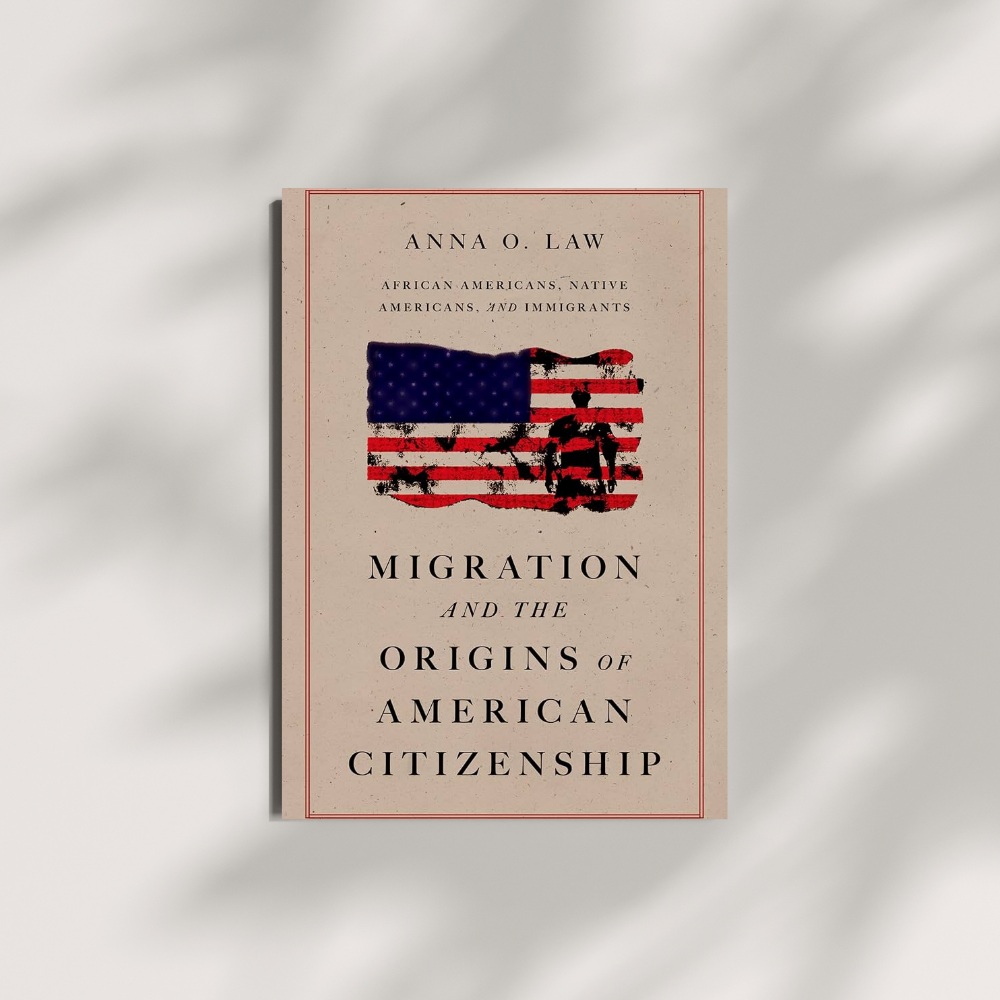
Anna O. Law, Migration and the Origins of American Citizenship: African Americans, Native Americans, and Immigrants (Oxford University Press, 2026).
We tend to think of immigration as an inherently federal responsibility. But for most of the nation’s early history, it wasn’t.
In Migration and the Origins of American Citizenship: African Americans, Native Americans, and Immigrants, Anna O. Law traces the long history of migration regulation from the colonial period through the late nineteenth century. In doing so, she shows how struggles over federal and state power shaped not only who could enter the country, but also who could remain, and ultimately who could claim the rights of American citizenship.
Law challenges the misconception that the United States maintained essentially open borders until the federal government began regulating immigration in the late nineteenth century. Long before then, she tells us, colonial, state, and local governments were actively “sifting” migrants, encouraging some people to enter and settle while restricting the movement and presence of others. The federal government’s eventual assumption of immigration authority was neither foreordained nor simply a response to increasing immigration. It emerged from a much longer history of federalism, slavery, race, and struggles over governmental power.
Law examines immigration and citizenship together, resulting in a synthesis of European immigrants, enslaved and free African Americans, Native Americans, and Chinese immigrants into a shared analytical frame. Consequently, her argument pushes us to understand not only what it meant to have freedom of movement, but also something more easily overlooked: the freedom to remain. Who could establish a home without fearing removal? Who could cross a state boundary without having to prove a right to be there? Who enjoyed the legal protections of belonging?
The result is a significant work of scholarship that substantially reframes the history of American immigration and citizenship. The book is also remarkably timely. Contemporary debates over birthright citizenship, immigration, deportation, and the respective powers of state and federal governments have much deeper historical roots than our political discourse often acknowledges.
I thoroughly enjoyed Migration and the Origins of American Citizenship. It is ambitious, illuminating, and particularly valuable at a moment when Americans are once again debating what citizenship means and who gets to be an American.
Listen to or watch my conversation with Anna O. Law. Buy the book to explore the history behind one of the most consequential debates of our time.
Clio's Review: Beyond Norma Rae