Before Kinsey: The Forgotten Pioneer of Women’s Sex Research | Anya Jabour | Matters of Sex



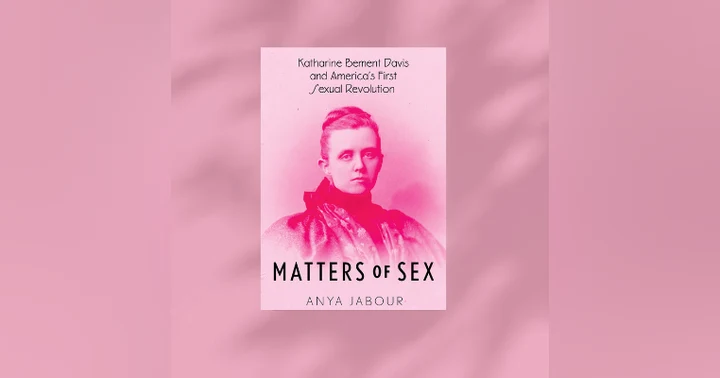
Historian Anya Jabour joins The Clio Dialogues history podcast host Jennifer Robin Terry to discuss Matters of Sex: Katharine Bement Davis and America's First Sexual Revolution.
They talk about a remarkable collection of previously unknown letters and papers discovered in a family closet, revealing the life of a pioneering researcher whose career took her from policing women's sexuality to advocating for their sexual knowledge and autonomy.
They also explore Davis's groundbreaking 1929 study of women's sexual experiences, the controversy surrounding its findings, and how her contributions were overshadowed and, as Jabour argues, even mansplained by Alfred Kinsey, the influential mid-twentieth-century sex researcher whose later studies transformed public understanding of human sexuality.
Jabour's biography restores Davis to the history of sexuality while examining the enduring tensions between scientific evidence, sexual freedom, and the regulation of women's bodies.
Featured Guest
Anya Jabour is an expert in the history of gender, society, and politics who is the Regents Professor of History at the University of Montana at Missoula. She has authored five books. Her latest is Matters of Sex: Katharine Bement Davis & America's First Sexual Revolution, published by New York University Press.
Buy the Book
Anya Jabour, Matters of Sex: Katharine Bement Davis and America's First Sexual Revolution
Or use the code NYUAU30 to get 30% off the book at nyupress.org. The code never expires.
BONUS: Use my Bookshop.org links to buy the book and you get instant literary cred, while the author, this podcast, and local indie bookshops get actual financial support. It’s the closest thing to ethically justified shopping you’ll do all week.
***************
If you enjoyed this episode…
Subscribe on YouTube
Follow on Instagram, Facebook, or Bluesky
Leave a review here. Reviews and shares make a real difference in helping thoughtful conversations about history reach new audiences.
**History runs on curiosity…and occasionally, caffeine.**
The Clio Dialogues is independently produced. If you'd like to help support future episodes, consider buying me a coffee. Every cup helps keep new conversations coming.
***************
Affiliate Disclosure
Some links in The Clio Dialogues show notes are affiliate links. As a Bookshop.org Affiliate and Amazon Associate, I may earn a small commission on qualifying purchases at no additional cost to you. Those commissions help offset the costs of producing The Clio Dialogues, allowing me to continue bringing historical scholarship to a wider audience. Thank you for your support.
Editorial Independence
The Clio Dialogues supports productive, respectful, freedom of expression. My, or my guests opinions may deviate from each other, or from yours -- and that's okay!
00:00 - Introduction
02:40 - The Closet Collection: Rediscovering Davis's Papers
06:30 - Eugenics and the Contradictions of Reform
09:27 - Policing Women's Sexuality at Bedford Reformatory
12:23 - Prison Reform, World War I, and the American Plan
17:05 - From Policing Sexuality to Sex Education
21:06 - The 1929 Study That Challenged Sexual Norms
26:08 - The Book's Reception and Kinsey's Legacy
Introduction
Host, Jennifer Robin Terry
Hello and welcome to the Clio Dialogues, the podcast that links history with the present to help us better understand the world we live in today. I am your host, Jennifer Robin Terry.
Guest, Anya Jabour
What she says is so provocative and shocking because basically it blows everyone's presuppositions about normal, average, respectable women right out of the water.
Host, Jennifer Robin Terry
This episode includes frank discussions of sexuality and sexual behavior in a historical and scholarly context. Listener discretion advised. My guest today is Anya Jabour, the Regent's Professor of History at the University of Montana at Missoula. She is the author of Matters of Sex, Catherine Bement Davis and America's First Sexual Revolution, published by New York University Press.
Host, Jennifer Robin Terry
Welcome, Anya. I am so excited that you're joining me here on the Clio Dialogues.
Guest, Anya Jabour
Thank you so much, Jennifer. I'm thrilled to be here. I have been putting all of the books on your most recent podcasts on my TBR list and recommending many of them to my students.
Host, Jennifer Robin Terry
Yay! That's so exciting.
Guest, Anya Jabour
For me too.
Host, Jennifer Robin Terry
Well, I've been really excited about this conversation. You've written a book about an extraordinary woman, Catherine Bement Davis, and I suspect that most of our listeners probably have never heard of her. So can you just introduce us to her?
Guest, Anya Jabour
Absolutely. So Davis called herself in her unfinished, unpublished memoirs, a busy woman. And that is a very apt description. She wrote this pathbreaking study of women's sexuality, the world's first published study of women, by women, for women, about women, that centered women's experiences and desires in 1929, decades before Kinsey even had the idea of conducting his studies of human sexuality. Kinsey is a household name and Davis is not. That's really unfair for a number of reasons. One, she anticipated him by decades. Two, he based his Kinsey scale on her work. And three, she founded the organization that funded his study. And although he, in his footnotes and bibliography, lists her, he certainly avoided mentioning this in any of his many media blitzes. And so I say in the book that in contemporary parlance, he basically mansplained her and in the process helped to erase her from our collective memory. He certainly was not the only one who erased her. Her incredibly misogynistic colleagues at the Bureau
The Closet Collection: Rediscovering Davis's Papers
Guest, Anya Jabour
of Social Hygiene, the Rockefeller-funded foundation that sponsored her work, also literally wrote her out of the history of the organization. The Bureau of Social Hygiene mysteriously lost all of the original completed surveys of the 2200 women who responded to the survey, which is one of the reasons that nobody has attempted a full-length biography of her. And the other reason is that everybody thought that there was no archive of her materials. And this is where Francie Pepper came in. Because Francie, her great niece, who was descended from Davis' brother, since Davis herself never married or had biological children, who had this amazing collection that I call the "closet collection," because she literally found it in a closet, which is just like the best thing ever for this particular project. Francie, in the process of cleaning out her mother's closet after her mother's passing, found a treasure trove of Davis materials. Everything from her unfinished autobiographical biography to her memorabilia, including the doll that her schoolteacher aunts gave her when she was a girl, the silver cake basket that her mother received for her valor in rescuing people from a horrific steamboat accident, the medals that Davis herself got from the Red Cross and from the Italian government after Davis did her own rescue mission in the wake of a devastating earthquake in Messina when she was attempting to enjoy a Mediterranean vacation and her very treasured badge as Gotham's first female commissioner of correction. And then a whole lot of scrapbooks and scrapbooks of clippings about her illustrious career. Francie found all these materials, and she and her sister Helen then added to that collection from like the 1980s forward, and they corresponded with librarians across the country, tracking down her correspondence. It had always been Francie's intention to write a biography of her illustrious ancestor. But very unfortunately, Francie was diagnosed with breast cancer.
Host, Jennifer Robin Terry
So, how did you come across all of this material? How did it come to you?
Guest, Anya Jabour
Well, it really did literally come to me in my email inbox and then in the physical mail for months. So I got an email initially from a fellow historian, Ellen Fitzpatrick. She gave Francie and her husband John Pepper my name, and they contacted me and we had many conversations via Zoom. This was at the height of the COVID pandemic when the world was shut down. I mean, this is when we were still like bleaching our green beans, you know, like that moment in time. And my Breckenridge biography had just come out. And in the meantime, I was casting around for a new project that I could do when A, I couldn't travel, and B, every repository was closed. This is like a historian's or any researcher really dream come true, right? Exclusive access to a collection of primary sources, including a memoir and handwritten letters that nobody but the family members had ever seen before.
Host, Jennifer Robin Terry
It really doesn't get much better than that. That's amazing.
Guest, Anya Jabour
But to make it better, it did get better because Francie, understandably, did not want to part with the originals, but she owned a home Xerox machine. And so she literally sent me what I called my history care packages at least once a week, sometimes more. And she sent me all the materials, like 50 pages at a time. And when I say all the materials, I wish I could show you. I have a full bookshelf of three ring binders filled with absolutely nothing but the materials I personally got from Francie.
Host, Jennifer Robin Terry
Well, that is an incredible research origin story. I don't think I've ever heard anything so amazing.
Guest, Anya Jabour
It
Eugenics and the Contradictions of Reform
Guest, Anya Jabour
was amazing. I mean, you know, it's bittersweet because I wasn't able to celebrate the final product with Francie. But she read every single chapter. Her husband John also read every single chapter multiple times. It was important to me to write a book that would be accessible to folks who were not necessarily academics, but who were intelligent, inquisitive, thinking people who wanted to learn about the world. And happily for me, Francie and John were those people. So they were like the perfect beta readers. I had this whole exchange with Francie and John, who were not at all concerned that Davis was what I call a likely lesbian, but who were profoundly disturbed, fairly enough, that she was definitely a eugenicist. This is an unfortunate feature of her life, and it is undeniably true. It is better documented than her lesbianism, in fact, uh, because she was openly eugenicist. Um she was not openly uh a lesbian.
Host, Jennifer Robin Terry
As were many people of the time, though, right? Openly eugenicists.
Guest, Anya Jabour
Oh, absolutely. I mean, Teddy Roosevelt, Charlotte Perkins Gilman, and problematic people like the birth control advocate Margaret Sanger. It was pretty much a foregone conclusion that a progressive era social scientist would at least for a period of time be involved in the eugenics movement. She did distance herself from it before she died. She never formally renounced eugenics, but she did start saying things like, there we must go slowly. She never endorsed, for instance, involuntary sterilization. She initially endorsed long-term institutionalization, but she backed away even from that position. I had these conversations with Francie and John about her eugenicist leanings that allowed me to explain in a way that somebody who doesn't study the early 20th century and who doesn't say what you just said, which is, well, yeah, but everyone was, right? I mean, like, they're really upset. I mean, they're like, explain this to us. How can this woman who was responsible for running New York State's probably first and only racially integrated facility, also a eugenicist, because she was the granddaughter of an abolitionist. She was incredibly proud of her abolitionist heritage. She's so committed to racial equality. She insisted that the inmates at Bedford Female Reformatory, where she was the inaugural superintendent, that they ate together, lived together, exercised together, took classes together, worked together. She absolutely considers herself to be an advocate of racial equality. And so did African Americans at the time. So the New York Age, an African-American newspaper, celebrated her and said, basically, here's a woman who advocates for all women regardless of race. So that's going on at the same time that she's advocating eugenics. And so to our 21st century heads, they're spinning, right? Because we're like, but wait, isn't eugenics always and necessarily racist? And the answer in this time period is, well, no.
Host, Jennifer Robin Terry
So
Policing Women's Sexuality at Bedford Reformatory
Host, Jennifer Robin Terry
can you tell us a little bit about Davis's early career with prison reform?
Guest, Anya Jabour
Yeah, absolutely. So one of the things I found intriguing from the very beginning about Davis is that she started off literally policing women's sexuality. Her entire job at Bedford Female Reformatory was incarcerating and rehabilitating so-called sex offenders, meaning women who engaged in sex outside of marriage or were suspected of engaging in sex outside of marriage.
Host, Jennifer Robin Terry
So for these girls, there really wasn't much of a distinction between actual criminal behavior and just violating social norms.
Guest, Anya Jabour
Yeah. I think about 40% of them had actually been convicted of common prostitution, but the majority of them had been convicted of allied offenses, things like disorderly conduct, things like being reported by their parents for staying out too late at night, being out without a chaperone, vagrancy, being unhoused. I mean, the things you could be arrested for and basically charged with prostitution, whether you were or were not, in fact, a sex worker, were incredible. So one of the stories I include is the story of Mabel Hampton. Even though Mabel Hampton's time did not technically overlap with Davis' time, Davis maintained a relationship with Bedford throughout her entire time in New York, which would include Mabel Hampton's time. So for those unfamiliar, Mabel Hampton was an African-American woman. She was very active in Harlem's renaissance of the 1920s, not only in the musical and the theatrical and the literary scene, but also in the burgeoning, what we would now call queer scene. She was very out-lesbian, and she never had voluntary sex with a man, but she was incarcerated for sex work. And she 100% was never a sex worker. She was a survivor of sexual assault by a man. She never had voluntary sex with a man for cash or otherwise at all. Never, never, never, never. And her oral histories at the Lesbian Herstory Archives in New York City are extremely clear on this point. So my point here is that most of the people who were, quote, sex offenders at Bedford probably were not. Nonetheless, Davis's job was to police these women's sexuality and to reform them and turn them from being what she called moral weaklings to moral women. And she took to that role with gusto. She was really committed initially to what she called the woman's standard of morality, which was chastity prior to marriage and monogamy within marriage. And obviously, the women who were confined on charges of prostitution did not adhere to that standard. And she did believe that they needed to reform. Having said that, she then, of course, goes on to become this advocate of women's sexual autonomy.
Host, Jennifer Robin Terry
How
Prison Reform, World War I, and the American Plan
Host, Jennifer Robin Terry
much time elapses between when she is working at the reformatory to when she starts advocating for women?
Guest, Anya Jabour
Well, not much. So immediately after the reformatory, she left there in early 1914 to become New York City's first female commissioner of correction. And then she didn't hold that position for very long because she decided that, as she said, locking up and letting go is useless. And that was the system. New York City's carceral institutions were these kind of revolving doors. She said that they offered no opportunity for meaningful reform, that the whole system was broken, and that she wanted to change the system to be more like the reformatory model. So to that end, she authored and then lobbied for and then oversaw New York City's first parole board, which, like the system that she did at Bedford, required longer sentences, but also flexible sentencing. So people would be committed for a longer period of time, but they would be eligible for early release based on things like good behavior, employability, evidence of reform, reduced recidivism. And she knew that because as commissioner of correction, she instituted the practice of fingerprinting. For the first time, there was a system of determining whether or not inmates had ever been confined before, because of course, many of these people used multiple aliases. In 1917, the United States is getting ready to enter World War I. And Davis loses her position in the city government because it was a reform government and the so-called boy mayor who had appointed her got voted out. She then took a job with her longtime supporter, John D. Rockefeller Jr., who had founded this anti-vice think tank called the Bureau of Social Hygiene. He had been a longtime admirer of Davis's. He called her the most intelligent woman in America. He had been super impressed by her adoption of intelligence testing at Bedford. In fact, he paid for her intelligence testing at Bedford, which ties into the eugenics thing that we were talking about before. He was very concerned about commercialized sex and he reached out and offered her a job at the Bureau of Social Hygiene. By that point, it was clear that the US was going to enter World War I and that the US government was going to implement this program that became known as the American Plan, which was a program to attempt to combat both commercialized sex and to curb the spread of what we would now call STIs, but which they then called venereal disease, with some kind of program. The deal that Rockefeller and Davis worked out was that he would, quote, loan her to the federal government to work on the American plan. The American plan was largely a horrifically repressive plan as far as women and girls were concerned, under which a minimum of 30,000 women and probably many more were incarcerated on the flimsiest of pretexts for years as suspected carriers of venereal disease and were subjected to completely ineffective, terribly painful, and appallingly violating treatments that included involuntary pelvic exams, treatment with toxic substances such as mercury and arsenic, as well as being, well, incarcerated without actually committing a crime. I mean, blatant violation of these women's civil liberties.
Host, Jennifer Robin Terry
So let me ask you: the men involved in the other side of these crimes, what's going on with them when these women are incarcerated?
Guest, Anya Jabour
Well, so there was a campaign for the men. It was called Fit to Fight. There was an educational film called Fit to Fight, and then later it was changed to Fit to Win, which is not nearly as lovely to say, but the online version that you can find now is called Fit to Win. The government's official position was a single sexual standard. And Davis was all over that because she had always believed in a single standard of sexual behavior for women and men. If women are expected to be chaste before marriage and monogamous within marriage, then so should men be. And she was thrilled that she had the federal government's official stamp of approval on that stance. She was offered a job running the repressive side of the American plan, which incarcerated these women, uh, sexually active or suspected sexually active women. And again, many of them were not. There's one. Her name was Nina McCall. She was a Midwestern girl. She was incarcerated on suspicion of sex work. She was subjected to these horrible treatments. I forget how many years she was in the system, but it was a long time. She sued, which is why we know her story. And here's the thing: she was a virgin.
Host, Jennifer Robin Terry
What? How did this happen?
Guest, Anya Jabour
Yes!
From Policing Sexuality to Sex Education
Guest, Anya Jabour
Well, she was out after dark without a chaperone. And she exchanged words with men who wore military uniforms. So Nina fought her sentence and she eventually won, which is why we know her story. Which is why we know that not only was she not a sex worker, she wasn't even sexually active. The whole system is as I've trained my students to say when they want to avoid obscenity, deeply problematic. Davis refused a job being in charge of that part of the American plan. And instead, she took a job doing what was called social hygiene, which was like a very primitive form of sex ed, except that she made it less primitive. And so instead of policing sexuality, she decided that it was important to educate women about sex. Her official brief was to tell women and girls, of course, don't have sex, don't pass on venereal disease. Venereal disease is bad, sex outside of marriage is bad, wearing revealing clothing is bad, don't do any of that. And she did those things, but she didn't limit herself to her brief. She founded this national speakers bureau of women physicians who spoke to a minimum of a million women around the country. The physicians went to high schools and workplaces and public gatherings like community centers. Meanwhile, the YWCA had a similar program that went to uh women's clubs primarily. Um, Davis was involved in both, the public and the private program. And she insisted on two things. One, that her lecturers hammer home the message of a single sexual standard, that it was completely, patently untrue, that it was a physical requirement for men to sow their wild oats, that it was safe to be celibate, and if women could do it, by God, so could men. So that was the first piece. And the second piece was that women needed to know about their own bodies. She was appalled by what she called the taboo on open discussions of sexuality. She said that as a result of this taboo, girls and women were, as she said, appallingly ignorant about their own bodies. So the second piece of her social hygiene campaign was providing women with scientifically accurate information. So she insisted on hiring not ministers, not moralists, not mothers, although many of them were mothers, on hiring physicians, people with medical degrees, who also happened to be women, and most of whom were married, and many of whom were mothers, to do this lecture bureau that went around the country to provide accurate information, not just about sexually transmitted infections, but about everything from like why you menstruate, when you menstruate, how do you become pregnant. She couldn't talk about how you don't become pregnant because that would have been illegal under the Comstock laws, but she could talk about how you did become pregnant, how genetics work, why it is that children can represent the father as well as the mother, because she became very concerned at the incredible ignorance of women. This young woman was mystified as to why it was that children resembled fathers instead of just mothers. And she concluded that perhaps wives drank their husband's blood to achieve this result.
Host, Jennifer Robin Terry
Wow.
Guest, Anya Jabour
Yes, so vampirism rather than genetics.
Host, Jennifer Robin Terry
I would fear for her husband if she wanted her child to look like him while she's pregnant.
Guest, Anya Jabour
Well, I think by the time she filled out the survey, she'd learned better. But that's what she thought. Um, when she was a girl, her mother had never even explained the mechanics of menstruation to her. So she wrote to Davis that when she'd had her first period, I naturally thought I was bleeding to death. That was the level of ignorance that Davis discovered. And so World War I then and this social hygiene program was a turning point for her. And from that point forward, she was full speed ahead on promoting women's sexual self-knowledge and women's sexual autonomy and women's sexual pleasure.
The 1929 Study That Challenged Sexual Norms
Host, Jennifer Robin Terry
Let's talk about the study that Davis published in 1929 because that seems to be where her work became really especially groundbreaking.
Guest, Anya Jabour
So this is Catherine Bement Davis's Factors in the Sex Life of 2200 Women, which is an incredibly boring-looking book. It's more than 400 pages long. If you flip through it, it's like chart after chart after chart after chart, and it seems like it's gonna be so dry, except that what she says is so provocative and shocking because basically it blows everyone's presuppositions about normal, average, respectable women right out of the water. So the prevailing supposition, which Davis herself started with, was that normal women, respectable women, good women, white, well to do, well educated women. Women like Davis were passionless, that they were completely uninterested in sex, and that they only engaged in sex for two reasons. One, to please their husbands, and two, to procreate. Except that, oh wait, Davis found that approximately 75% of married women used contraceptives. So they're clearly having sex for a reason that isn't about procreation. Even though contraceptives were technically illegal and they could only get them through the cooperation of a sympathetic family physician who prescribed diaphragms and contraceptive jellies as I love this, aids to conjugal hygiene. It's not about spacing your children. It's not about limiting your family size. It's not about fertility regulation. Oh no, it's about conjugal hygiene.
Host, Jennifer Robin Terry
That passes under the Comstock Act.
Guest, Anya Jabour
It was a loophole in the law by the 1920s. This is the genius of her deciding to limit her study to these nice, middle-class, white, well-to-do, well-educated club women and college graduates. They are like the most respectable women. And that's really different from all the studies that had come before, including Davis's own studies, which had focused on women who were incarcerated, women who were institutionalized, women who were stigmatized, women who were criminalized. And she did that very intentionally because nobody could say, although they tried, that these women were abnormal. Nobody could say, although they tried that these women were not representative. She knew exactly what she was doing.
Host, Jennifer Robin Terry
So this study was based on questionnaires that she sent to thousands of women. What kind of questions was she asking?
Guest, Anya Jabour
Tell me about your sex play in childhood. Tell me about your intense emotional relationships with other women. Were they sexual in nature? Did you recognize that at the time? Tell me about your experiences with auto-eroticism. Let me define that for you. Did it ever lead to orgasm? Let me define that for you too. And so that the survey itself becomes like this primer on how women can achieve sexual pleasure. I mean, it's amazing. I mean, the questions that she asks and then her explanations are like basically a step-by-step instruction on how you can enjoy yourself sexually with or without a husband.
Host, Jennifer Robin Terry
So, in a sense, the questionnaire was really a form of sex education itself.
Guest, Anya Jabour
Exactly. But it does it under the auspices of social science, which allows her to publish the book without being censored. And so then she polls these women and she finds that lo and behold, three-quarters of the married ones use birth control. So it's clearly not all about producing children. And then she finds that something like 66% of them masturbate, which has nothing to do with pleasing a husband, given that it's a solo activity. And then she finds a really large number, way bigger than the 10% number that we bandy about now, engaged in sexual relationships with other women, which again
Host, Jennifer Robin Terry
Has nothing to do with pleasing the husband
Guest, Anya Jabour
or with producing children. Right. Not to mention that it's illegal in every single state. And so clearly, women are not passionless. Women are passionate. Women's complaints about sex were that they didn't know enough about it, that they didn't know how to prevent pregnancy, that their husbands were terrible at it, that they had to work on their own to achieve orgasm, and that they vastly preferred it with women than with men. Nobody complained that they didn't like sex, except for the few people who said that the stigma and shame surrounding sex had completely ruined it for them. So the take-home message was that in spite of this prevailing belief in passionlessness, women like sex. Women like good sex, women like consensual sex, women like sex when they can control whether or not and when it results in pregnancy. So, you know, there are some asterisks here, very important asterisks. But nonetheless, the basic take-home is women like sex. And that was so shocking.
Host, Jennifer Robin Terry
How was
The Book's Reception and Kinsey's Legacy
Host, Jennifer Robin Terry
this book received?
Guest, Anya Jabour
Well, it was received really well, given that it was marketed very carefully and cautiously on purpose to avoid the Comstock laws. Overseas, Havelock Ellis, probably the most famous sexologist at the time, endorsed it in the nation. Within the US, Max Exner, who was the head of the YMCA and ran the Young Men's Christian Association's sex ed program, was a big supporter of Davis's. The Scientific American was a huge supporter of her work. Even before the book came out, they were running editorials saying, for too long we have thought we knew, but we did not know. Now at last we can know the truth with scientific, verifiable data. Widely reviewed in things like educational journals, social work journals, medical journals. And it immediately sold out, went into a second printing. Davis was thrilled. She told her longtime secretary, Ruth Topping, who had helped her with the research, that it bids fair to be a bestseller. She was very excited about that. This is while her misogynist male colleagues are saying that she's completely lost it, that she's hysterical, that she's lost her mind, that the study is not scientific, that it's going to ruin the reputation of Rockefeller and all of his agencies, that he needs to wash his hands of her ASAP. Rockefeller didn't do that. But then once the book was published, the Bureau completely distanced themselves from it and mysteriously lost the surveys and refused to share any information about it with anyone, including researchers. So they basically buried it. You know, her book did have currency and was widely cited and used in the 30s, the 40s, and even a little bit into the 50s. But then Kinsey came along, he used her research, he used the money from the agency that she founded and funded, the Committee for Research on Sex Problems, which was another Rockefeller-funded agency. He produced the Kinsey Reports and he was a superstar. He presented himself as the first to study normal sexuality. He presented himself as the first to do a large-scale statistical study. He and his all-male research team decided to focus first on men's sexuality and only later on women's. I mean, she was like 15 years in the grave by the time they started studying women.
Host, Jennifer Robin Terry
What does this book help us to better understand about today?
Guest, Anya Jabour
So much. I mean, you could not pick an issue that has to do with women, sex, sexuality, reproduction, bodies, social science, the importance of reliable information when making political decisions and policy, just to start a long list. This book is there. I mean, KBD, if she were alive now, I am 100% convinced that she would be on the front lines fighting for reproductive justice for all, fighting for civil rights for LGBTIQ plus people, that she would be saying that we need policies that are based on data, not on bias. It has now been not quite 100 years since she published the book, more than 100 years since she launched the research for the book. I think that her legacy is more important now than ever before. And I hope that readers believe me. Actually, I don't hope readers believe me. I hope readers go out and read the book and are convinced that that is the case. They shouldn't believe me. They should read the book.
Host, Jennifer Robin Terry
To learn more about this and any book featured on the Clio Dialogues, read Clio's book reviews at www.cliodialogues.com. This has been the Clio Dialogues. Please like, follow, and subscribe. And join me again next time because history isn't finished with us.