Clio’s Review of California Dreams
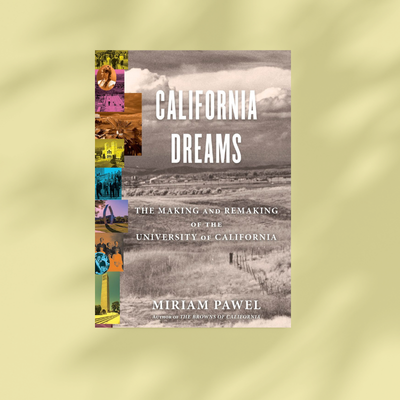
Miriam Pawel, California Dreams: The Making and Remaking of the University of California. Bloomsbury Publishing, 2026.
In 1868, California set out to build something extraordinary in the rolling hills overlooking the San Francisco Bay: a university for the people. It was an ambitious democratic experiment that promised free tuition and would soon admit women as well. It was remarkably progressive for the time.
In California Dreams, award-winning historian Miriam Pawel traces more than 150 years of history, arguing that the University of California has both reflected and shaped the state's evolving identity. Among other things, its history reveals a persistent struggle to reconcile academic excellence with democratic access, a tension intensified by California's extraordinary growth and deep inequalities.
Pawel organizes her narrative into five sections, each anchored by an individual whose life illuminates a different chapter of the university's development. Milicent Washburn Shinn, an early Berkeley graduate and pioneering child psychologist, embodies the opportunities and obstacles that confronted women in nineteenth-century higher education. Kenneth Bailey, a scholar-athlete, illuminates UCLA's emergence amid Southern California's growing demand for educational opportunity. Clark Kerr, the architect of California's 1960 Master Plan, transformed competing institutions into a coordinated system promising universal access to higher education. David Alan Masumoto, a Japanese American farmer, writer, and environmental advocate, demonstrates how university education connected agricultural knowledge with questions of land, identity, and sustainability. Finally, the experiences of José Manuel Alamillo, a Mexican immigrant and first-generation college student, frame the fifth section, revealing both the possibilities of educational mobility and the barriers that persist.
Drawing on archival records, institutional debates, and personal histories, Pawel situates UC within broader scholarship on California's political development, public education, and social mobility. Her biographical approach makes institutional history accessible. Pawel’s focus on undergraduate education allows her to explore the university’s democratic mission in considerable depth. Other dimensions of UC’s history, including its graduate programs, research institutions, and medical centers, remain subjects for another work.
California Dreams offers historians, educators, alumni, and general readers a compelling account of an institution whose greatest achievement, and unfinished challenge, remains its promise to serve the people of California. IMHO, it should be required reading for UC employees.
For a little higher education without the tuition bill, listen to my conversation with Miriam Pawel on The Clio Dialogues, then pick up a copy of California Dreams.
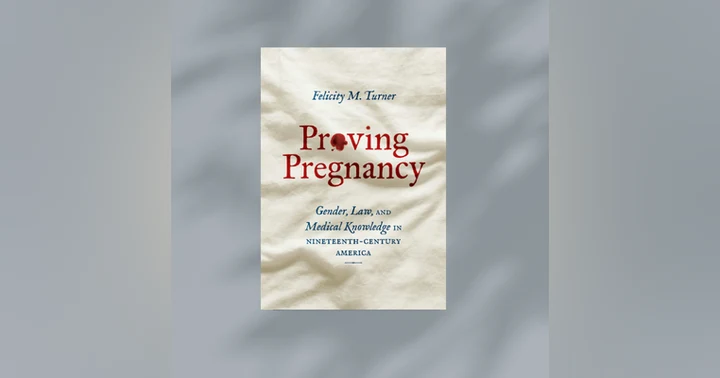
Clio's Review of Proving Pregnancy