Clio's Review: Beyond Norma Rae
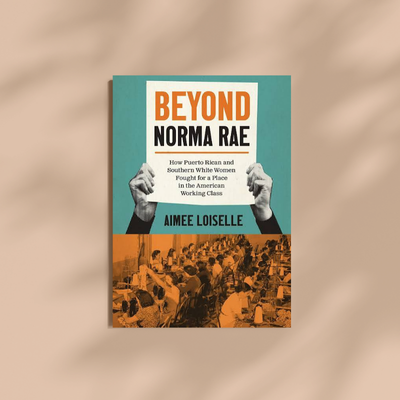
Aimee Loiselle, Beyond Norma Rae: How Puerto Rican and Southern White Women Fought for a Place in the American Working Class (University of North Carolina Press, 2023).
For millions of Americans, the image of actress Sally Field standing alone atop a factory table, holding a handwritten “UNION” sign high above her head, came to symbolize American labor activism in the late 1970s. And therein lies the problem.
The iconic scene from the 1979 film Norma Rae was drawn from the life of Southern textile worker Crystal Lee Sutton, and it really did happen. Yet, as Aimee Loiselle explains in Beyond Norma Rae, Hollywood’s transformation of Sutton into Norma Rae, a lone white working-class heroine, obscured not only Sutton’s real-life experiences but also a much larger story of multiracial collective action and women’s labor activism.
To get at a more comprehensive and inclusive story, Loiselle starts in the late nineteenth century, placing the rise of the New South textile industry alongside the development of garment manufacturing in Puerto Rico following the U.S. occupation of the island in 1898. By bringing these histories together, she reveals the transnational forces that connected Southern mill workers and Puerto Rican needleworkers even as racially and geographically segregated labor markets kept them apart.
At the center of the book are Sutton and Puerto Rican needleworker and labor activist Gloria Maldonado, two women for whom labor activism became a lifelong mission. Both understood that representation mattered, not only within unions but in the broader culture as well. Both pushed back, with varying degrees of success, when filmmakers took liberties with their stories. If Norma Rae provides one popular culture lens through which Americans came to understand Southern textile workers, West Side Story provides another for Puerto Rican workers. Loiselle reveals how the popular musical and film likewise obscured the real work women did in the textile industry.
Carefully researched and engagingly written, Loiselle’s book restores to history the workers who fell outside the cinematic frame. In doing so, she challenges familiar assumptions about who constitutes the American working class and demonstrates how readily collective movements can become individual hero stories for the sake of entertainment. The book is at once a women’s labor history, a Hollywood history, and a media critique. I highly recommend it.
So, skip the Hollywood version of working-class history. Pick up Beyond Norma Rae and meet the workers who were there all along.
And check out my conversation with Aimee Loiselle.
Clio's Review: The Westerners